DESTINATION · ANTALYA
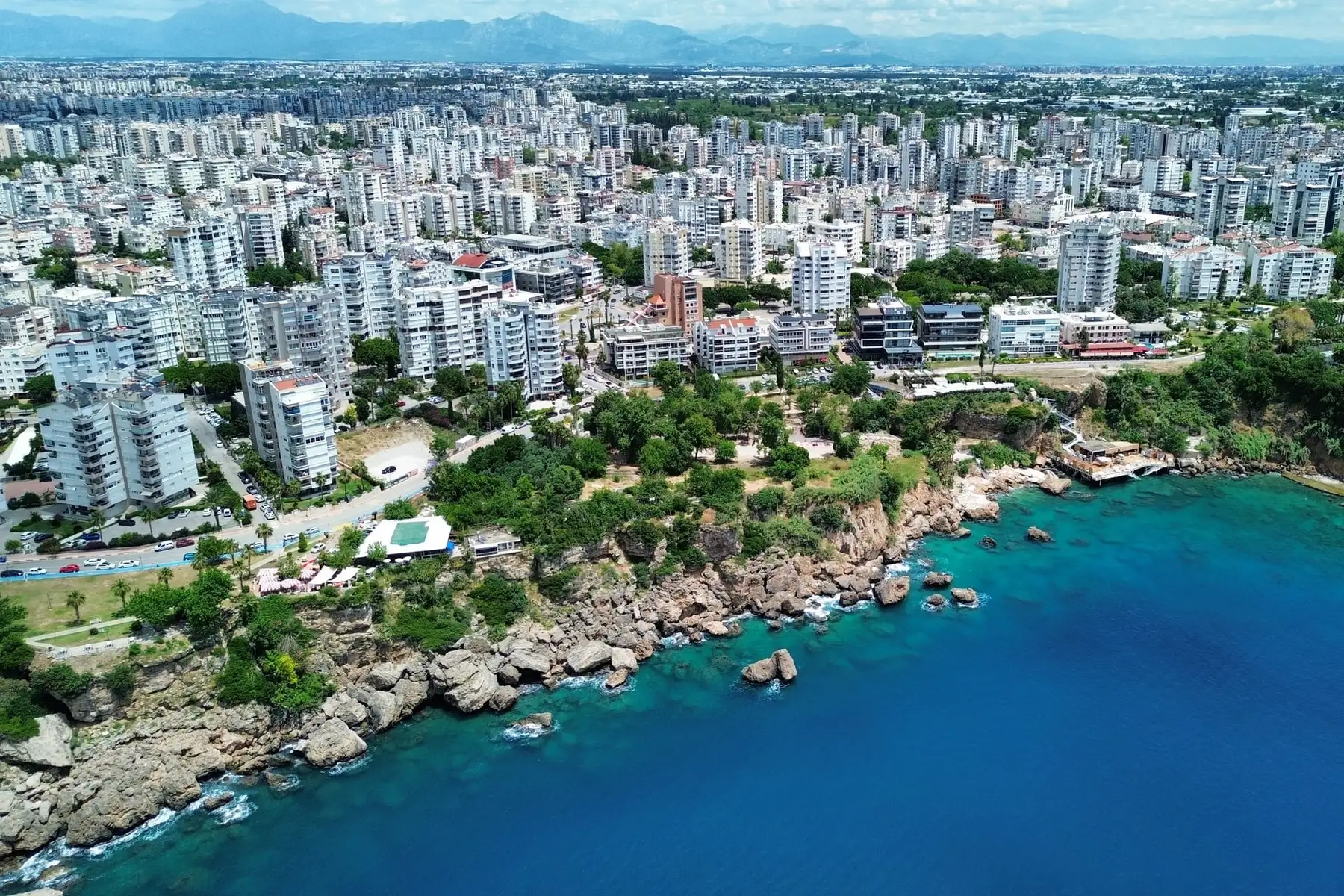
Antalya, a city with resorts attached
Most of this coast is all-inclusive frontage. Antalya itself is a city of two and a half million with a walled Ottoman quarter, a Roman gate and the best archaeological museum in the country ten minutes from the sea.
- Airport
- AYT · Türkiye
- On sale
- 7 of 12 months
- Airport spread
- £93 across 10 UK airports
Today's best fare
London Antalya
£82
Measured on a live search, refreshed hourly. Prices move — confirm on Kiwi.com.
Departure airports
£93 apart, depending where you take off
Every UK airport searched separately for this destination, cheapest first, as a return fare for one person with taxes in. Manchester to Antalya and London to Antalya are not the same route and we do not price them as one. Each figure is a fare of one stop at most — the same limit as the price at the top of this page — and each is that airport's own cheapest week, so the dates change from row to row. Every link opens on the dates its price was found on.
All 10 airports have a fare to Antalya within one stop today. London covers Heathrow, Gatwick, Stansted, Luton, City and Southend in one search.
From your airport
How long is the flight to Antalya?
Distance, nonstop flight time, whether a direct flight exists and what it costs, worked out separately for each of the ten UK airports.
The year, month by month
When Antalya is worth the airfare
Average daytime high for each month. The greyed months are ones we refuse to advertise — not because they are cheap, but because the place cannot deliver what the page promises.
- Jan 14° not sold
- Feb 15° not sold
- Mar 18° not sold
- Apr 21°
- May 25°
- Jun 30°
- Jul 34°
- Aug 34°
- Sep 31°
- Oct 26° today's fare
- Nov 20° not sold
- Dec 16° not sold
7 of 12 months on sale. The reason is below, not in the numbers.
Antalya has one of the sharper seasonal swings on this board, and the Taurus mountains are the reason. They rise to over three thousand metres directly behind the city, trapping the sea air against the coast — which makes the summers heavy and humid, and gives the coast the highest rainfall totals in Mediterranean Türkiye during the wet half of the year. It also means you can be on the beach and in snow within ninety minutes; the ski resort at Saklıkent is an hour and a half above the city.
The sea lags the air by about two months, which is what makes autumn here so much better value than spring. By the end of the season the Mediterranean along this coast is at its warmest and stays swimmable long after the crowds have gone home; at the start of it the air is pleasant for walking ruins while the water is still cold enough that most people do not get in. If the trip is about swimming, the back half of the season is the one to book.
What closes this destination is the resort economy rather than the weather. The all-inclusive estate at Belek, Kemer and Side is built for charter traffic, and when that stops the hotels shut rather than discount — so a cheap out-of-season fare buys you a working city and a shuttered coast. Antalya itself, being a real city, carries on: the museum, the old town and the tram all run year round, and it is a perfectly good short break when the beach is not the point.
Buy a Museum Pass if you are doing two sites
The Türkiye pass covers Aspendos, Perge, Side and the Antalya Museum and pays for itself on the second entry. It does not cover Hagia Sophia if you continue to Istanbul.
The case for it
Why Antalya
Antalya is the exception on the Turkish Riviera: a real city rather than a resort strip, big enough to have its own tram network, university and old town, and sitting on a limestone shelf that drops into the Mediterranean as a cliff. The walled quarter of Kaleiçi is Ottoman timber houses and a Roman harbour, and Hadrian's Gate at its edge was built for the emperor's visit in 130 AD and has been standing in a working street ever since.
What surrounds it is the reason most British visitors come, and it is a different proposition. Belek to the east is golf and five-star all-inclusive; Kemer to the west is a smaller, greener strip with the Taurus mountains coming down behind it. Between and beyond them lie some of the best-preserved Roman sites in the Mediterranean — the theatre at Aspendos still seats fifteen thousand and still hosts opera, and it survived because the Seljuks used it as a caravanserai rather than a quarry.
The reservation is that this coast has a real off season, and the all-inclusive model magnifies it. When the charter flights stop, most of the resort estate closes rather than discounting, the boat trips end and the strips outside the hotels shutter. Antalya city keeps going — it has a population to serve — but a cheap winter fare into a Belek or Kemer hotel is often a fare into a building site of closed neighbours.
On the ground
Five things worth doing
- 01
Walk Kaleiçi and out through Hadrian's Gate
The old town is free to wander and small enough to do without a plan: cobbled lanes of restored Ottoman houses dropping to a Roman harbour that is now a marina. Hadrian's Gate, three marble arches from 130 AD, sits at the landward edge with the original road surface still visible below the modern one, grooved by cart wheels. Go in the early evening when the day trippers have gone and the carpet sellers have stopped working. The Yivli Minare, the fluted brick minaret, is the landmark to navigate by.
- 02
Give a morning to Aspendos
Forty-five minutes east, the best-preserved Roman theatre anywhere in the Mediterranean — stage building intact, acoustics intact, still used for performances. Entry is 700 lira (about £12), free with a Museum Pass Türkiye. Go at opening; there is no shade in the auditorium and it fills with coaches by ten. The aqueduct in the fields beyond it is unfenced, free and almost always empty, and is worth the ten-minute detour more than the site shop is.
- 03
Spend an hour in the Antalya Museum
One of the strongest archaeological collections in the country and consistently the thing visitors say they wish they had done first. The Hall of Gods holds the sculpture lifted from Perge — a room of Roman marble in better condition than most of what is in Istanbul — and the sarcophagi gallery is remarkable. Entry is around 600 lira (£10) and it is covered by the Museum Pass. It is at the western end of the city on the tram line, which makes it an easy half-day paired with Konyaaltı beach below.
- 04
See both Düden waterfalls
Two entirely different things with the same name. The upper falls, Düdenbaşı, are inland in a park where the river drops into a cave you can walk behind; entry is 100 lira (about £1.70). The lower falls are where the same river goes over the cliff straight into the sea on the eastern edge of the city, and that one is free — a public park with a viewing platform, best in late afternoon. Boat trips from the marina run past the sea face for about £12.
- 05
Take the tram out to Konyaaltı
The city's own beach is a three-kilometre pebble strip under the cliffs at the western end, backed by a park rather than by hotels, and it is where Antalya actually swims. The tram from the old town costs around 20 lira (£0.35) and takes fifteen minutes. Sunbeds run about £5 for two with a parasol, and the municipal sections are cheaper than the beach clubs either side. Pebbles, not sand — bring something for your feet.
After the flight
What it costs once you land
City prices rather than resort-strip ones, which run two to three times higher and are often quoted in euros. Turkish inflation moves lira figures faster than anywhere else on this list — treat these as a shape, not a quote.
- Beer, local bar £2.40 an Efes in the city; hotel bars in Belek are far more
- Dinner for two, mid-range £26 mezze and grilled meat in Kaleiçi, away from the harbour
- Airport to Kaleiçi £13 yellow taxi, twenty-five minutes; the T1A tram is under £1
- Car hire, per day £26 needed for Aspendos and Perge; the city itself has trams
- Sunbed and parasol £5 per set on the municipal stretch of Konyaaltı
- Pide and ayran £3.50
Checked August 2026. Sources at the foot of this page.
Before you book
Practical, for a British passport
Entry rules are for a British Citizen passport holder and come from gov.uk, read on 2026-08-07. They change; check before you fly.
- Airport
- AYT, Antalya, twenty-five minutes east of the city and among the busiest holiday airports in Europe. The T1A tram runs from the terminal into town for under a pound. Belek is about forty minutes east, Kemer forty-five minutes west and Side an hour — check which your hotel is, because they are in opposite directions.
- Entry
- No visa. No fee. Up to 90 days in any 180-day period. Expiry at least 150 days after the date you arrive, and at least one blank page. The 150-day rule is the trap. It is neither the three months most of Europe asks for nor the six months most of the long-haul list asks for, and a passport with four months left will be turned away at check-in. The e-visa British travellers used to buy has not been needed since 2024.
- Currency
- Turkish lira. Cards work in the city, in hotels and on the tram; markets, dolmuş minibuses and beach kiosks want cash. Change at a döviz office rather than the airport, and expect resort areas to quote in euros or sterling at a rate that suits them.
- Language
- Turkish. English, German and Russian are all widely spoken across the resort belt; in the city away from Kaleiçi it thins quickly, and menus stop being translated.
- Time zone
- Türkiye keeps UTC+3 year round and does not change its clocks, so it is two hours ahead of Britain in summer and three in winter. The gap shifts when the UK changes, not when Türkiye does.
- Plugs
- Type C and F, 230V. A British type-G plug does not fit; pack an adapter, and expect older resort rooms to be short of sockets.
- Health
- The GHIC is worthless here — Türkiye is outside the EU — so private insurance is essential and should cover watersports if you intend to do any. Antalya's private hospitals are good and used to treating visitors, and they expect payment or an insurer's guarantee before treatment. Drink bottled water.
- Safety
- The FCDO advises against all but essential travel to areas near the Syrian border, which is far from this coast. Locally the everyday risks are the sun, the pebbles and the traffic: pedestrian crossings are advisory rather than binding, and the coast road carries fast-moving transfer coaches.
A bed
Where to stay in Antalya
The real choice is city or resort, and they are entirely different holidays. Kaleiçi is a place to walk out of your hotel into; Belek and Kemer are places you fly to and largely stay put in.
Kaleiçi
Restored Ottoman houses turned into small hotels inside the walls, with the harbour below and the museum and beach a tram ride away. The base for anyone who wants a city rather than a compound, and the only one where dinner is a decision rather than a buffet. The lanes are cobbled and steep in places, cars cannot reach most doors, and the harbour bars carry into the night.
Stays in Kaleici Opens in a new tab ALL-INCLUSIVE AND GOLFBelek
Forty minutes east, a purpose-built strip of large five-star all-inclusives behind a long sandy beach, with more championship golf than anywhere else in the country. The best of this coast's resort stock and priced accordingly. There is essentially no town — you are choosing a hotel rather than a place, and everything outside the gates is a taxi ride.
Stays in Belek Opens in a new tab MOUNTAINS BEHINDKemer
Forty-five minutes west, smaller and greener than Belek, with pine forest and the Taurus rising immediately behind the hotels and a pebble shore rather than sand. Cheaper, more compact, and with an actual small town attached. It is also the base for the western Lycian Way and the Olympos ruins down the coast, which makes it the better choice if you intend to leave the pool.
Stays in Kemer Opens in a new tabEvery area pinned on one map, set to the dates of the fare above. Change them for your own trip and it reloads live availability.
Open the Antalya map Opens in a new tabGetting around
Antalya has a tram, which is rare on this coast and worth using. The T1A runs from the airport into the centre and the nostalgic line loops through Kaleiçi and out to Konyaaltı and the museum, all for well under a pound a ride on an AntalyaKart. Between them they cover almost everything a visitor wants in the city itself, and they are quicker than a taxi through the afternoon traffic.
For the ruins, either hire a car or take a tour. Aspendos, Perge and Side are spread along the coastal plain east of the city, and the public buses that serve them run to local rather than tourist timetables — reaching Aspendos by dolmuş involves a change and a walk in from the main road. A day's car hire costs about the same as two seats on an excursion coach and lets you arrive before the coaches do.
If you are staying in a resort, budget for the transfer in both directions and in time as well as money. Belek and Kemer are in opposite directions from the airport, and hotel-arranged coaches often call at several properties before yours. A private car costs more and can halve the journey after a late arrival.
Food and local tips
The coast's cooking is southern Turkish and leans on the grill: kebap in a dozen regional forms, lahmacun, pide, and the mezze that arrive before you have ordered. As everywhere in Türkiye the mezze are charged per dish, so wave away what you do not want. Antalya's own contribution is piyaz, a white bean salad with tahini that is served as a side and is better than that sounds, and şiş köfte from the grills in the streets behind the old town.
The harbour restaurants in Kaleiçi are priced for the view and are perfectly pleasant; the better and cheaper eating is two streets up the hill, or out at the Konyaaltı end where the city eats. Look for a lokanta with trays behind glass for lunch. Alcohol carries heavy tax in Türkiye, so the wine list in a resort hotel will cost more than the food, and an all-inclusive package is often genuinely the cheaper arithmetic here rather than a marketing claim.
Piyaz, the Antalya version
White beans, tahini, egg and onion, dressed with lemon — a local dish rather than a national one. About 120 lira (£2) as a side, and most kebap houses in the city make their own.
Ready for Antalya?
Pick your departure airport and see what the route costs today from each of the ten we track.
See the £82 fare Opens in a new tabSame band
Other winter sun destinations
Where the numbers came from
- Aspendos, Perge and Düden waterfall entry prices theothertour.com Opens in a new tab read 2026-08-07
- Antalya airport transfer, tram and taxi costs merrytourism.com Opens in a new tab read 2026-08-07
- Upper Düden waterfall entrance fee rotasenin.com Opens in a new tab read 2026-08-07
- Entry rules for a British Citizen passport gov.ukOpens in a new tab read 2026-08-07