DESTINATION · ISTANBUL
Istanbul, on both sides
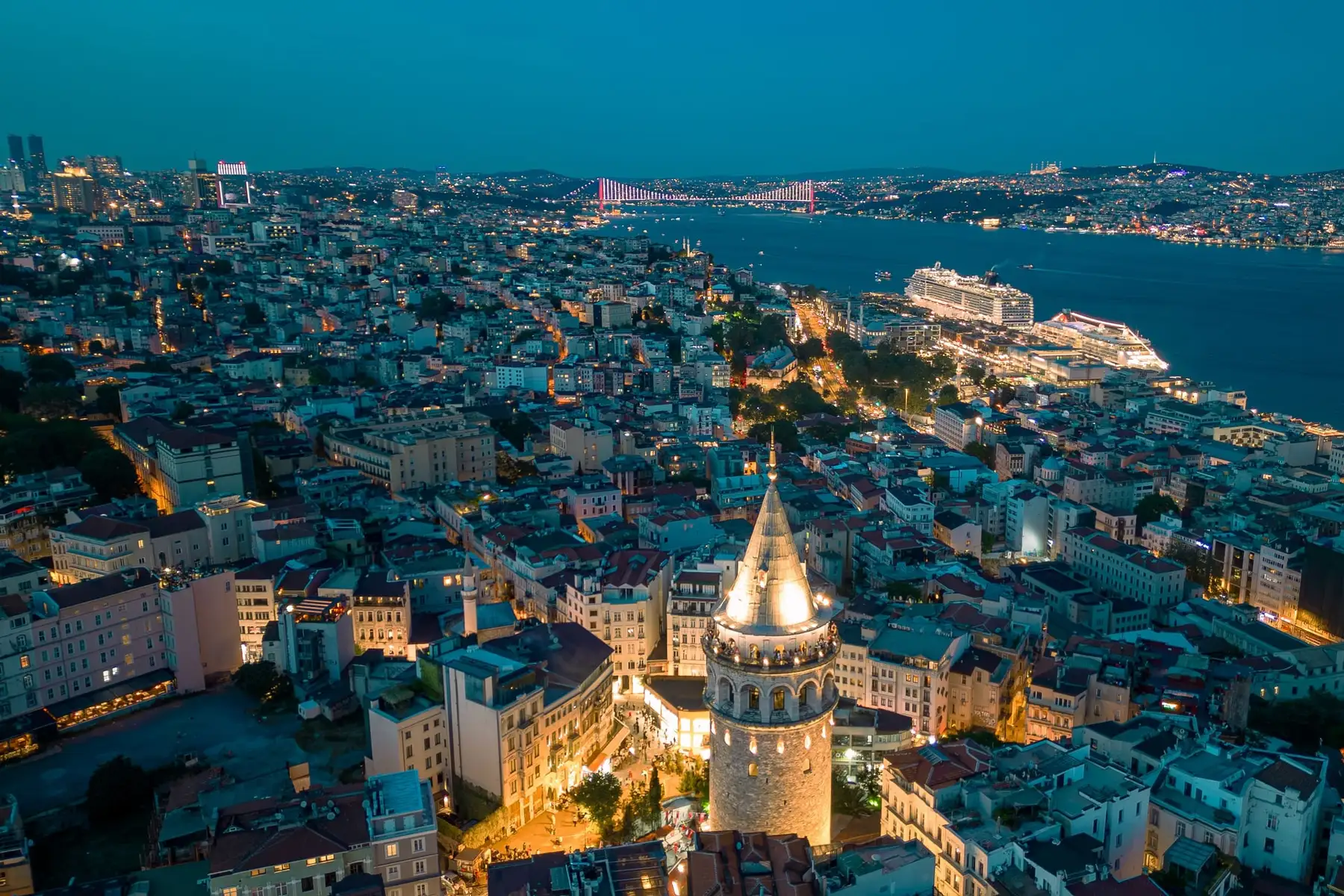
A city of sixteen million with a strait through the middle of it, where the commute is a ferry and the two banks are on different continents. The one destination on this board that is not about a beach at all.
- Airport
- IST · Türkiye
- On sale
- 12 of 12 months
- Airport spread
- £78 across 10 UK airports
Today's best fare
Liverpool Istanbul
£94 £173 −46%
Measured on a live search, refreshed hourly. Prices move — confirm on Kiwi.com.
Departure airports
£78 apart, depending where you take off
Every UK airport searched separately for this destination, cheapest first, as a return fare for one person with taxes in. Manchester to Istanbul and London to Istanbul are not the same route and we do not price them as one. Each figure is a fare of one stop at most — the same limit as the price at the top of this page — and each is that airport's own cheapest week, so the dates change from row to row. Every link opens on the dates its price was found on.
All 10 airports have a fare to Istanbul within one stop today. London covers Heathrow, Gatwick, Stansted, Luton, City and Southend in one search.
From your airport
How long is the flight to Istanbul?
Distance, nonstop flight time, whether a direct flight exists and what it costs, worked out separately for each of the ten UK airports.
The year, month by month
When Istanbul is worth the airfare
Average daytime high for each month. The greyed months are ones we refuse to advertise — not because they are cheap, but because the place cannot deliver what the page promises.
- Jan 9°
- Feb 10°
- Mar 12°
- Apr 17°
- May 22°
- Jun 27°
- Jul 29°
- Aug 29°
- Sep 25°
- Oct 20° today's fare
- Nov 15°
- Dec 11°
12 of 12 months on sale. No closed season.
Istanbul is not a winter sun destination and does not pretend to be. It sits at the same latitude as Rome but with the Black Sea to the north feeding cold air down the strait, so it gets a real winter — grey, damp, windy, with snow most years — and a hot, humid summer that empties the city as residents leave for the coast. Between those it has two of the best months in Europe. The strait itself is the local weather system: the lodos from the south-west brings warm wet air and closes the ferries, and the poyraz from the north-east brings clear cold days.
This is a city rather than a resort, which is why nothing here closes and why the calendar works differently from everywhere else on this board. The museums, the bazaars and the ferries run all year. What changes is comfort: in high summer walking the old city between sights is punishing and the queues are outdoors, while in deep winter the same walk is short and grey but the sights are half empty and hotel rates fall away.
The one date to check is Ramadan, which moves earlier by about eleven days a year. Istanbul keeps working through it — this is not Marrakesh — but the mosques are busier, Sultanahmet fills with families breaking the fast in the square at dusk, and the atmosphere in the evenings is one of the better things to see here. The public holidays at the end of it book out the city, so look at the dates before committing.
Buy an Istanbulkart at the airport
One card covers metro, tram, bus, funicular and the commuter ferries, and each ride costs a fraction of the single-ticket price. It is the cheapest thing you will do here.
The case for it
Why Istanbul
Istanbul is the only city built on two continents, and that is a fact about how it works rather than a piece of trivia. The Bosphorus is a working waterway thirty kilometres long carrying tankers between the Black Sea and the Mediterranean, and the commuter ferries cut across it all day. Living here means crossing water, and the cheapest and best thing a visitor can do is join in: a public ferry from Eminönü to Kadıköy costs well under a pound and gives you the skyline from the angle every photograph of the city is taken from.
It has been the capital of two empires and the architecture is stacked accordingly. Hagia Sophia was a cathedral for nine hundred years, a mosque for five hundred, a museum for eighty-five, and is a working mosque again since 2020 — the mosaics and the medallions share the same walls. The Basilica Cistern is a sixth-century underground reservoir held up by three hundred and thirty-six columns robbed from older buildings. None of this is preserved apart from the city; it is in the middle of it, with traffic outside.
The honest warning is cost, and it is a recent change. Museum entry for foreign visitors has risen steeply and is now priced in euros or in lira pegged to them — the three headline sights together run to well over eighty pounds a head, which is more than several days of everything else. Istanbul is still cheap to eat and travel in and is no longer cheap to sightsee in, and a first-time visitor who has not checked will get a shock at the first ticket window.
On the ground
Five things worth doing
- 01
Go into Hagia Sophia early
Foreign visitors pay about €25 (£22) and enter through a separate upper-gallery route; worshippers use the ground floor free. It opens to tourists after the morning prayer and the queue is shortest in the first hour. Shoulders and knees covered, shoes off, and women need a head covering — scarves are handed out at the door. The Istanbul Museum Pass is not valid here, which catches people who bought it expecting the opposite. Allow an hour; the galleries and the mosaics are the reason to be there.
- 02
Cross to Kadıköy on a public ferry
Not a Bosphorus cruise — a commuter boat, on an Istanbulkart, for well under £1. Twenty minutes from Eminönü to the Asian side, tea sold on deck, gulls following the stern. Kadıköy at the other end is where the city actually shops and eats: a market of fishmongers and cheese shops, the bar streets around Kadife, and almost no coach parties. Go over in the afternoon and come back after dark, when the old city is lit from the water. It is the single best-value hour in Istanbul.
- 03
Take Topkapı without the Harem, or with it
The Ottoman court's palace for four centuries, on the headland above where the Bosphorus meets the Golden Horn. The combined ticket covering the palace, the Harem and Hagia Irene is 2,750 lira (about £47) for foreign visitors; the palace alone is less, and the Museum Pass covers that part but not the Harem. The Harem is the half worth paying extra for. The site is large and largely outdoors, so allow three hours and do not attempt it in the same day as anything else.
- 04
Descend into the Basilica Cistern
A sixth-century underground water store the size of a cathedral, lit and set to music, with two Medusa heads used as column bases at the far end — one upside down, one on its side, and nobody knows why. Daytime entry is 1,950 lira (about £33), and the evening Night Shift ticket is 3,000 lira (£51) for a quieter, more theatrical version. It is cool underground in every sense and takes forty minutes. Book a slot: the queue outside is long and entirely in the sun.
- 05
Eat your way through the Spice Bazaar and past it
Free to walk into, and the covered hall is the tourist half. The real market is the streets behind it — Tahmis Caddesi for coffee ground while you wait, Hasırcılar for cheese, olives and pastırma, and stalls where a hundred grams of Turkish delight costs about 80 lira (£1.40) rather than the four times that charged inside. Taste before you buy, which is expected. Do the same at the Grand Bazaar next door and treat the first price as an opening position rather than a number.
After the flight
What it costs once you land
City prices where residents pay them, not Sultanahmet terrace prices. Turkish inflation moves lira figures faster than anywhere else on this list, and museum entry in particular has risen sharply — treat these as a shape rather than a quote.
- Beer, local bar £3.40 alcohol is heavily taxed here; tea and coffee are a fraction of it
- Dinner for two, mid-range £26 a meyhane with mezze, away from the old city
- Airport to Sultanahmet £25 taxi from IST; the Havaist coach is about £4 and the metro less
- Museum day, three headline sights £102 the largest single cost of a trip here, and often a surprise
- Public transport day £2.50 Istanbulkart covers metro, tram, bus and the commuter ferries
- Balık ekmek by the bridge £2.20 grilled fish in bread, sold from the boats at Eminönü
Checked August 2026. Sources at the foot of this page.
Before you book
Practical, for a British passport
Entry rules are for a British Citizen passport holder and come from gov.uk, read on 2026-08-07. They change; check before you fly.
- Airport
- IST covers both: Istanbul Airport on the European side, forty-five minutes to an hour from the old city and where most British flights land, and Sabiha Gökçen (SAW) on the Asian side, which is cheaper to fly into and up to ninety minutes further out. Check which one a fare uses before you book a hotel — the two are on opposite sides of a city of sixteen million.
- Entry
- No visa. No fee. Up to 90 days in any 180-day period. Expiry at least 150 days after the date you arrive, and at least one blank page. The 150-day rule is the trap. It is neither the three months most of Europe asks for nor the six months most of the long-haul list asks for, and a passport with four months left will be turned away at check-in. The e-visa British travellers used to buy has not been needed since 2024.
- Currency
- Turkish lira. Cards are accepted almost everywhere including taxis and the Istanbulkart machines; the bazaars, the ferries' tea sellers and street food want cash. Use a döviz exchange office in Eminönü or Beyoğlu rather than the airport, and refuse to be quoted in euros where lira is the real price.
- Language
- Turkish. English is reliable in hotels, restaurants and anywhere touristed, and thin on public transport and in the residential districts. Signage on the metro and ferries is bilingual.
- Time zone
- Türkiye keeps UTC+3 all year and never changes its clocks. That means two hours ahead of Britain in summer and three in winter — the gap moves because the UK moves, which trips up anyone comparing a return flight's times to the outbound.
- Plugs
- Type C and F, 230V. A British type-G plug does not fit; bring an adapter.
- Health
- The GHIC does not apply — Türkiye is outside the EU — so private travel insurance is essential. Istanbul's private hospitals are excellent and expect payment or an insurer's guarantee up front. Tap water is chlorinated and technically safe but nobody drinks it; bottled is sold everywhere for pennies.
- Safety
- The FCDO advises against all but essential travel to areas near the Syrian border, which is a thousand kilometres from here, and warns that demonstrations in Istanbul can turn confrontational and should be avoided. The everyday risks are pickpocketing on the tram and around the bazaars, and the shoeshine trick and the invitation to a bar with an unpayable bill, both of which are still worked on tourists here.
A bed
Where to stay in Istanbul
The decision is which side of the water and how far from the sights. All three of these are twenty minutes apart by tram or ferry, and they are three different cities.
Sultanahmet
The old city, with Hagia Sophia, Topkapı, the Blue Mosque and the Cistern all within ten minutes on foot, and by far the widest choice of beds. The obvious first-visit base. The drawback is that it is almost entirely visitors: the restaurants are priced and pitched for them, and the streets empty of locals after dark in a way that makes the rest of Istanbul hard to find.
Stays in Sultanahmet Opens in a new tab WHERE THE EVENINGS AREBeyoğlu
Across the Golden Horn — Galata, İstiklal, Karaköy — and the modern city's centre of gravity, with the bars, the music, the design shops and the best of the food. A tram ride from the old city and steeply uphill in places. Choose it if the trip is about the city rather than a checklist of monuments; it is noisier at night and the hills are real.
Stays in Beyoglu Opens in a new tab THE ASIAN SIDEKadıköy
Twenty minutes by ferry and a different pace entirely: a residential, university-heavy district with the city's best food market and almost no tourism. Cheaper for the same standard, and the ferry commute is a pleasure rather than a chore. The trade is obvious — every sight in the old city is a boat ride away, so this suits a second visit or a longer stay more than a two-night dash.
Stays in Kadikoy Opens in a new tabEvery area pinned on one map, set to the dates of the fare above. Change them for your own trip and it reloads live availability.
Open the Istanbul map Opens in a new tabGetting around
Get an Istanbulkart at the airport and top it up. One card covers the metro, the trams, the buses, the funiculars and — this is the part visitors miss — the public ferries, at a fraction of what a single ticket costs. The T1 tram runs through Sultanahmet and over the Galata Bridge into Beyoğlu and is the spine of any sightseeing day. The metro from Istanbul Airport connects into the same network.
The ferries are transport, not an excursion. Regular commuter routes cross from Eminönü and Karaköy to Kadıköy and Üsküdar every fifteen minutes or so, and there are longer Bosphorus services up to Anadolu Kavağı near the Black Sea. A tourist cruise costs many times what the public boat does for a view that is barely different, and the public boats sell tea on deck.
Taxis are metered and the meter is often not used with visitors. Use the BiTaksi or Uber apps, which put a price on it before you get in, and be aware that crossing the Bosphorus by road at rush hour can take longer than the whole ferry journey plus the walk at either end. Do not hire a car: the traffic is among the worst in Europe and there is nowhere to put it.
Food and local tips
Turkish food in Istanbul is regional cooking from all over the country rather than a single cuisine, and the useful distinction is between the kebap houses of the south-east, the meyhanes with their mezze and rakı, and the esnaf lokantası — the tradesman's canteen with trays of stews behind glass where you point and eat for a few pounds. The last of those is where the city eats lunch and where the value is. Breakfast is a serious meal here: a full Turkish kahvaltı is a table of small plates and takes an hour.
Two things to skip and two to seek. Skip the restaurants with a man outside holding a laminated menu, and skip the Grand Bazaar's tea rooms. Seek out balık ekmek — grilled mackerel in bread from the boats at Eminönü — and a proper meyhane evening on the Asian side, where the mezze arrive on a tray to be chosen from and rakı is drunk with water and slowly. Alcohol is taxed heavily, so a night on beer costs more than the meal it accompanies.
Kahvaltı, the long Turkish breakfast
Cheeses, olives, tomato, cucumber, honey with clotted cream, eggs, and bread that keeps arriving. About 400 lira (£7) a head in Kadıköy, and it replaces lunch.
Ready for Istanbul?
Pick your departure airport and see what the route costs today from each of the ten we track.
See the £94 fare Opens in a new tabSame band
Other winter sun destinations
Where the numbers came from
- Hagia Sophia, Topkapı and Basilica Cistern entry prices for foreign visitors theistanbulinsider.com Opens in a new tab read 2026-08-07
- Topkapı combined ticket and Museum Pass coverage topkapi-palace.org Opens in a new tab read 2026-08-07
- Basilica Cistern day and night ticket prices basilica-cistern.org Opens in a new tab read 2026-08-07
- Entry rules for a British Citizen passport gov.ukOpens in a new tab read 2026-08-07