DESTINATION · NEW YORK
New York, on a subway fare
The most expensive city in America to sleep in and one of the cheapest to move around. Three dollars gets you from the Bronx to Coney Island, and almost everything worth seeing is on that map.
- Airport
- NYC · USA
- On sale
- 12 of 12 months
- Airport spread
- £197 across 10 UK airports
Today's best fare
London New York
£333 £402
Measured on a live search, refreshed hourly. Prices move — confirm on Kiwi.com.
Departure airports
£197 apart, depending where you take off
Every UK airport searched separately for this destination, cheapest first, as a return fare for one person with taxes in. Manchester to New York and London to New York are not the same route and we do not price them as one. Each figure is a fare of one stop at most — the same limit as the price at the top of this page — and each is that airport's own cheapest week, so the dates change from row to row. Every link opens on the dates its price was found on.
All 10 airports have a fare to New York within one stop today. London covers Heathrow, Gatwick, Stansted, Luton, City and Southend in one search.
From your airport
How long is the flight to New York?
Distance, nonstop flight time, whether a direct flight exists and what it costs, worked out separately for each of the ten UK airports.
The year, month by month
When New York is worth the airfare
Average daytime high for each month. The greyed months are ones we refuse to advertise — not because they are cheap, but because the place cannot deliver what the page promises.
- Jan 4°
- Feb 5°
- Mar 10° today's fare
- Apr 16°
- May 22°
- Jun 26°
- Jul 29°
- Aug 28°
- Sep 24°
- Oct 18°
- Nov 12°
- Dec 6°
12 of 12 months on sale. No closed season.
New York sits on the eastern seaboard where continental air meets the Atlantic, and the result is a city with four genuinely distinct seasons and violent transitions between them. Winter brings nor'easters that can drop enough snow to shut the city for a day; the height of summer is humid in a way that surprises people who expected a European city, because the same continental air that freezes it in the cold half bakes it in the warm one. There is no dry season — rainfall is spread evenly through the year.
That makes the shoulders unusually valuable here. Spring and autumn give you a walkable city with the parks at their best and the light doing the thing that makes every photograph of New York look like a film. The autumn stretch in particular is the local consensus: the humidity has broken, the trees in Central Park turn, and the cultural season starts. Nothing ever closes, so the question is comfort rather than availability.
For a British calendar the pattern is straightforward and mostly about price. The run-up to Christmas is the most expensive fortnight of the year and the most atmospheric — the tree, the windows, the skating rinks — and the two weeks after New Year are among the cheapest, because the city is cold and nobody wants to be here. Anyone prepared to wear a coat gets the same city at a materially lower rate.
Tap the same card at every turnstile
Contactless caps at roughly £28 across a rolling seven days on subway and local buses, so after about twelve journeys the rest of the week is free. Use one card for one person throughout.
The case for it
Why New York
New York is a city of eight and a half million people on a set of islands, and the geography is why it works the way it does. Manhattan is twenty-one kilometres long and less than four wide at its widest, so the density has always gone upward, and the subway was cut through the schist underneath it because there was nowhere else to put the traffic. That grid and that system are the two things that make a short visit here more productive than in almost any other city.
It also has more free things worth doing than any comparable destination. The Staten Island ferry costs nothing and passes the Statue of Liberty. The High Line, Central Park, Grand Central's main concourse, Brooklyn Bridge on foot, the 9/11 memorial pools and the Metropolitan Museum's roof garden on a pay-what-you-wish ticket for New York State residents are all either free or nearly so.
What is not cheap is the bed and the bill. Manhattan hotel rates are among the highest anywhere and the room will be small; and the price on any menu is not the price you pay, because 8.875% sales tax is added at the till and 18 to 20% is expected on top as a tip. British visitors routinely under-budget by a quarter for exactly this reason, and it applies to everything from a coffee to a theatre ticket.
On the ground
Five things worth doing
- 01
Ride the Staten Island ferry, free
A commuter boat that runs around the clock, carries seventy thousand people a day and passes within a few hundred metres of the Statue of Liberty in both directions. It costs nothing and no ticket is required. Stand on the starboard side heading out and the port side coming back. It is a straight substitute for a harbour cruise costing thirty pounds, and the only cost is that you cannot land on Liberty Island — for that you need the ferry from Battery Park and a booked ticket.
- 02
Pick one observation deck, not three
The Empire State Building starts around $44 (about £35) for the 86th floor, with the 102nd from $79 (£62). Top of the Rock, The Edge and Summit One Vanderbilt are all in the same range and all sell a version of the same view. The Empire State is the one you cannot see from the others, which is an argument for a different deck; Top of the Rock puts the Empire State in your photograph. A CityPASS at about £105 makes sense only if you will do four or five paid attractions.
- 03
Walk the High Line and keep going
A disused elevated freight line turned into a linear park running two and a half kilometres from the Meatpacking District up to Hudson Yards, free and open until late. Go north to south in the afternoon for the light. It ends at Chelsea Market at the southern end, which is worth the detour, and the galleries in west Chelsea below it are free to walk into and are showing better work than most of what is ticketed.
- 04
Cross Brooklyn Bridge on foot at dawn
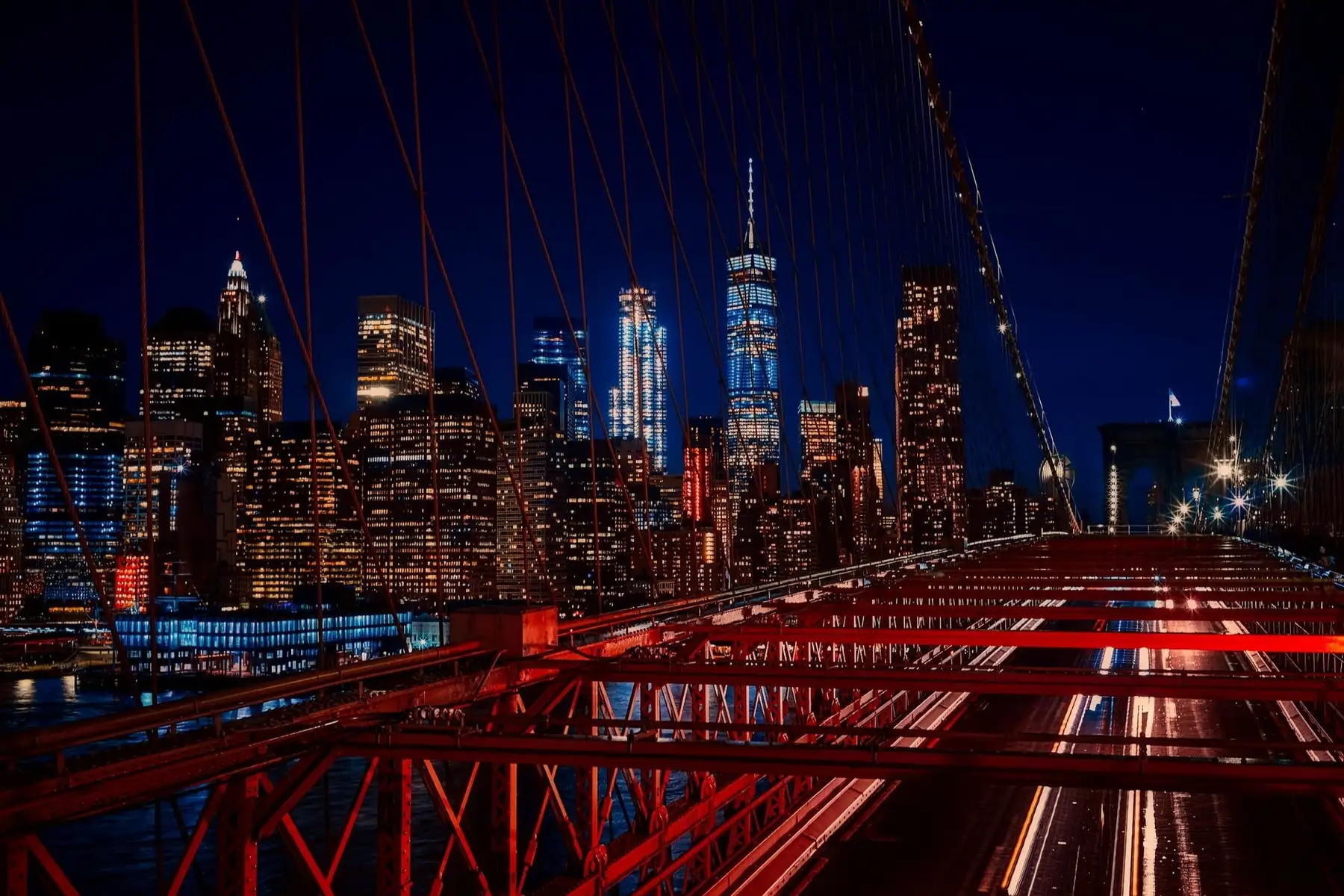
Free, about half an hour, and completely different depending on when you do it. By mid-morning the walkway is a slow-moving crowd; at seven it is cyclists and commuters and you can stop. Walk from the Brooklyn side towards Manhattan so the skyline is in front of you rather than behind — take the subway to High Street or Clark Street and start there. Coffee in Dumbo at the far end, under the bridge, is the reward.
- 05
Give a morning to one big museum
The Met asks about $30 (£24) for out-of-state visitors and is genuinely a day; MoMA is the same price and is a very full morning; the American Museum of Natural History is the one to take children to. Do not attempt two in a day. The Met's admission covers the Cloisters uptown on the same day, which almost nobody uses and which is the better half if you have been to the main building before.
After the flight
What it costs once you land
Manhattan prices outside the tourist frontage. Two things inflate every figure here: 8.875% sales tax added at the till rather than shown on the shelf, and a tipping expectation of 18 to 20% that is social rather than optional.
- Beer, neighbourhood bar £7 before tax and tip; a Midtown hotel bar is nearly double
- Dinner for two, mid-range £75 before tax and tip, which add roughly a quarter
- JFK to Manhattan £9 AirTrain plus subway; a yellow cab is a flat £55 plus tolls and tip
- Subway single £2.40 tap a contactless card; it caps at about £28 for a rolling week
- Observation deck £35 the cheapest of the five, before any upgrade
- Slice of pizza and a coffee £6
Checked August 2026. Sources at the foot of this page.
Before you book
Practical, for a British passport
Entry rules are for a British Citizen passport holder and come from gov.uk, read on 2026-08-07. They change; check before you fly.
- Airport
- NYC covers three: JFK, an hour out and connected by AirTrain to the subway; Newark (EWR) in New Jersey, similar distance with its own AirTrain to New Jersey Transit; and LaGuardia (LGA), closest but with no rail link and a bus or taxi only. Check which one a fare uses — a cheap Newark arrival can cost the saving back in transfers.
- Entry
- ESTA. USD 40 (about £32) — $10 charged on application, $30 more only if approved. Up to up to 90 days. Valid for the length of your planned stay. The fee rose from $21 to $40 on 30 September 2025, so any figure under thirty pounds you read elsewhere is out of date. An approved ESTA lasts two years or until the passport expires, whichever comes first — worth checking before you rebook, because one bought for a previous trip may still be live. Apply on esta.cbp.dhs.gov; the paid lookalike sites charge several times the fee for the same form. An ESTA is permission to fly, not permission to enter: the officer at the border decides that.
- Currency
- US dollar. Cards and contactless work everywhere including the subway turnstiles, and cash is barely needed. Sales tax of 8.875% is added at the till, not shown on the price, and tipping at 18 to 20% is expected in any establishment with table service.
- Language
- English, plus around two hundred others. No barrier at all, though the pharmacy vocabulary differs — paracetamol is Tylenol or acetaminophen, and it is not sold in British strengths.
- Time zone
- Five hours behind the UK. The clocks change on different dates on either side of the Atlantic, so for a couple of weeks each spring and autumn the gap is four hours — worth checking against the actual dates before booking a same-day connection.
- Plugs
- Type A and B, 120V. A British type-G plug does not fit and the voltage is half of home. Phone and laptop chargers cope; hair appliances bought in Britain generally do not.
- Health
- The GHIC is worthless and American healthcare is the most expensive anywhere — a single emergency-room visit runs to four figures before treatment. Comprehensive insurance is the most important purchase of the trip, and pre-existing conditions must be declared or the claim fails. Pharmacies are open late and can advise, which is the cheap first step.
- Safety
- No FCDO warning against travel. New York is now among the safer large American cities and ordinary precautions are enough — awareness on late-night subway platforms rather than avoidance of them. The commonest problems for visitors are the costumed characters in Times Square who demand payment for photographs, and unlicensed cab touts at the airports.
A bed
Where to stay in New York
The subway makes almost anywhere workable, so this is a question of what you want outside the door in the evening rather than how close you are to the sights.
Midtown
Times Square, the theatres, Grand Central, the Empire State and the largest concentration of hotel rooms in the country. Everything is a short walk or one subway ride, which is the case for it. The case against is that Midtown empties of residents in the evening and fills with visitors, so the restaurants near your hotel will be the worst value in the city.
Stays in Midtown Opens in a new tab OLDER AND QUIETERLower Manhattan
The Financial District and the streets around it — the oldest part of the city, with the 9/11 memorial, the Staten Island ferry and Brooklyn Bridge on the doorstep. Rates run below Midtown for the same standard because it was built for offices, and it is genuinely quiet at night. Fewer places to eat within a block, and a longer ride to anything uptown.
Stays in Lower Manhattan Opens in a new tab WHERE PEOPLE LIVEBrooklyn
Across the river, and a different city: Williamsburg, Dumbo and Brooklyn Heights are all a few subway stops from Manhattan with better food, more space and lower rates. The skyline view is from here rather than in it. The trade is the commute — twenty minutes each way adds up over a short trip, and late-night service is slower.
Stays in Brooklyn Opens in a new tabEvery area pinned on one map, set to the dates of the fare above. Change them for your own trip and it reloads live availability.
Open the New York map Opens in a new tabGetting around
The subway is the whole answer. It runs twenty-four hours, covers four boroughs, and you tap a contactless bank card straight at the turnstile — no ticket, no card to buy. The fare is the same however far you go and it caps at about £28 across a rolling week, so heavy use becomes free after roughly twelve rides. Download an offline map: the signal underground is patchy and the express and local distinction on the same line catches everyone out once.
Walking is the other half. Manhattan's numbered grid makes it almost impossible to get lost above Houston Street — avenues run north to south, streets east to west, and twenty blocks is about a mile. Below Houston the old street plan takes over and a map becomes necessary again. Most visitors walk far more than they expect, so the shoes matter more than the itinerary.
Yellow cabs are metered and easy to hail; Uber and Lyft work everywhere and are usually dearer in Manhattan than a cab. From the airports, the AirTrain into the subway or New Jersey Transit is a fraction of a taxi and often quicker at rush hour. Do not hire a car — parking is punitive, the tolls are constant and there is nowhere you need one for.
Food and local tips
New York's cheap food is its best argument. A slice of pizza, a bagel with cream cheese and lox, a halal cart platter, a Chinatown noodle soup and a deli sandwich the size of a brick are all under a tenner and all better than the equivalent anywhere else. The delis are an institution rather than a lunch — Katz's is worth the queue once, and you take a ticket at the door and guard it. Bagels are boiled here, which is why they are dense, and a British supermarket bagel is a different food.
Two habits save real money. Breakfast at a diner or a bodega rather than the hotel, which will charge thirty pounds for what the corner does for eight. And remember the arithmetic on everything: the menu says twenty, the till says twenty-two, and the card machine suggests a further four. Bars often run a happy hour with genuinely halved prices, usually early evening on weekdays, and it is one of the few discounts in the city that is not a trick.
A bacon, egg and cheese from a bodega
On a roll, wrapped in foil, made in ninety seconds by someone who has made ten thousand of them. About £4, sold on nearly every corner, and the actual breakfast of the city.
Ready for New York?
Pick your departure airport and see what the route costs today from each of the ten we track.
See the £333 fare Opens in a new tabSame band
Other long-haul destinations
Where the numbers came from
- Empire State Building and CityPASS prices decks-nyc.com Opens in a new tab read 2026-08-08
- Subway fares, the OMNY weekly cap and AirTrain costs mta.info Opens in a new tab read 2026-08-08
- The ESTA fee increase and US entry rules cbp.gov Opens in a new tab read 2026-08-08
- Entry rules for a British Citizen passport gov.ukOpens in a new tab read 2026-08-07