Cheap Flights to Zanzibar from the USA
An Indian Ocean island with powder-white beaches, a UNESCO-listed medieval city, and reef snorkeling off the shore. Zanzibar punches well above its price point — and it's still far enough off the mainstream tourist circuit that it rewards the effort of getting there.
Why Zanzibar, right now
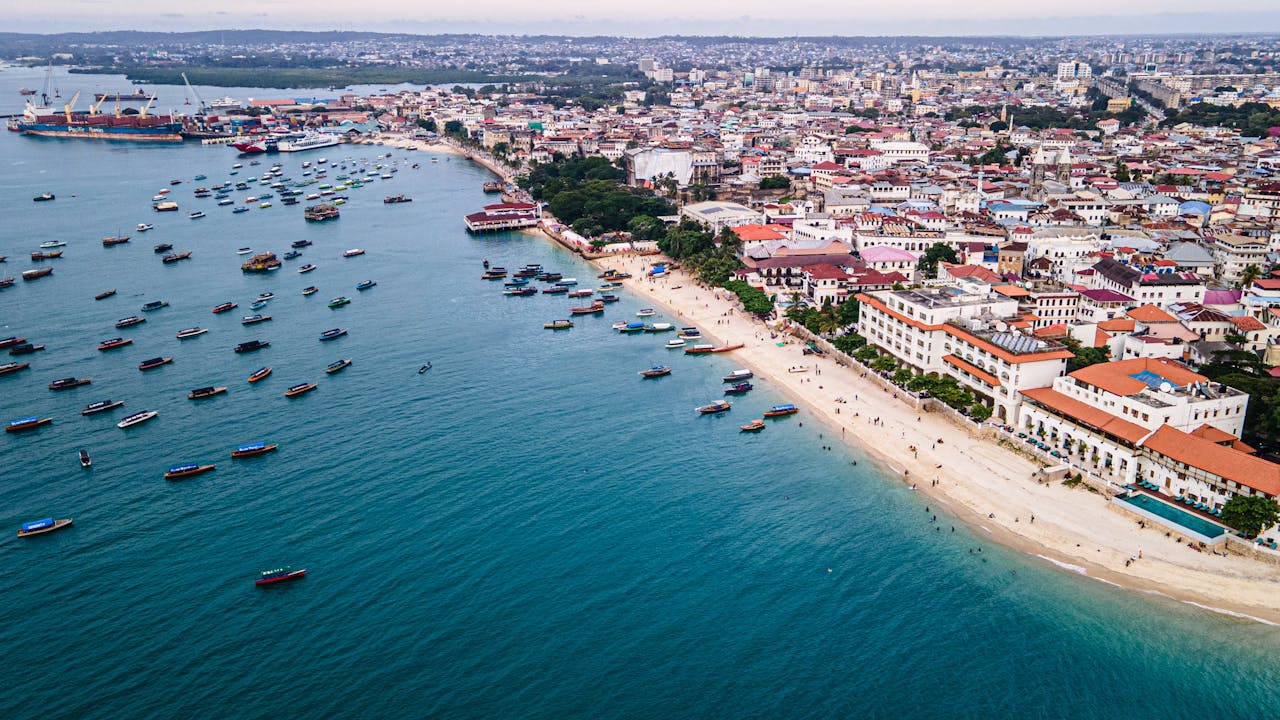
Zanzibar — officially the Zanzibar Archipelago, practically the island of Unguja — sits 22 miles off the Tanzanian coast in the Indian Ocean. The beaches on the north and northeast shores are what the brochures show: genuinely turquoise water, white sand, and the kind of coral reef that makes snorkeling worthwhile without a dive certification. Nungwi and Kendwa on the north tip, Paje and Jambiani on the southeast — each has a different character, and the island is small enough (53 miles long) that you can sample several without burning a full day in transit.
Stone Town, the old capital on the west coast, is something else entirely. A UNESCO World Heritage Site, it's a dense web of narrow streets built by Arab traders in the 1800s — ornately carved wooden doors, crumbling coral-stone buildings, a fort, a palace, spice markets, and a waterfront that gets the full Indian Ocean sunset. Budget half a day to get lost and another half to find what you missed. Most beach resorts are 30–90 minutes north or east by road.
The practical math works for the distance. A beach bungalow in Nungwi runs $60–$150 a night. A full seafood dinner with a cold Kilimanjaro beer costs $12–$20. A half-day dhow snorkeling trip to Mnemba Atoll — some of the best reef in East Africa — runs $40–$60. For a destination this dramatic, the daily spend is closer to Southeast Asia than to the Maldives or Seychelles.
Top 5 things to do in Zanzibar
-
Snorkeling at Mnemba AtollThe reef around Mnemba Island, off the northeast coast, hosts sea turtles, dolphins, and dense coral gardens. You can't land on the island (it's a private resort) but the surrounding marine reserve is open. Half-day dhow trips depart from Nungwi and Matemwe and typically run $40–$60 including basic snorkel gear. Go in the morning — visibility is best, and afternoon winds pick up. Book through your accommodation rather than a beach tout for vetted operators.
-
Stone Town walking tourStone Town earns its UNESCO designation — the architecture is genuinely unlike anywhere else in Africa. Focus on: the Old Fort (free to enter), the House of Wonders (currently being restored, but the exterior is still worth seeing), and Forodhani Gardens at sunset where local vendors set up a food market with fresh octopus, lobster, and Zanzibar pizza (a thin crepe folded around egg and vegetables, $1–$2). A guided walking tour with a local runs $20–$30 and covers context that maps can't give you.
-
Spice farm tourZanzibar earned the nickname "Spice Island" for a reason — cloves, nutmeg, vanilla, cinnamon, and cardamom still grow here. A half-day spice farm tour in the central highlands runs $20–$30 and includes tasting and a substantial lunch. Skip the tours that rush you through for 45 minutes. The better ones take 3 hours, include a traditional meal, and let you buy spices directly from the farm. Ask your hotel for a recommended operator — quality varies considerably.
-
Jozani Forest and Red Colobus MonkeysThe Jozani-Chwaka Bay National Park in the center of the island is the only place in the world where Zanzibar red colobus monkeys live wild. They're habituated to humans and remarkably close. Entry fee is about $10. The forest also has mangrove boardwalks and bushbabies if you visit at dusk. Combined with a drive up the east coast to Paje beach, this makes a solid full-day itinerary from Stone Town or a northern beach resort.
-
Sunset dhow cruiseThe traditional wooden sailing dhow is the historic vessel of the Swahili coast, and sunset cruises from Stone Town harbor run $25–$50 per person including drinks and snacks. The light on the Indian Ocean at golden hour is exceptional, and the old harbor with its fishing boats and island silhouettes makes for memorable scenery. Book direct from the Stone Town waterfront — prices are posted at multiple kiosks and are fairly consistent.
Zanzibar also offers scuba diving certifications, kitesurfing lessons at Paje (one of the best kitesurfing spots in East Africa), and multi-day sailing trips to the outer islands. TripAdvisor's Zanzibar listings are well-reviewed and a solid starting point for booking water sports and excursions in advance.
Explore Zanzibar activities on TripAdvisor →Practical info for US travelers
| ✈️ Airport | ZNZ — Abeid Amani Karume International Airport, 4 miles south of Stone Town. Taxis to Stone Town run $10–$15; to north beaches expect $30–$50 depending on distance. |
| 🛂 Visa | US citizens need a visa. A Tanzania e-Visa (valid for Zanzibar) costs $50 and can be obtained online at eservices.immigration.go.tz before travel. Apply at least 2 weeks ahead. |
| 💵 Currency | Tanzanian Shilling (TZS). $1 ≈ 2,600 TZS. Beach resorts and hotels price in USD and accept cards. Local restaurants, markets, and daladalas (shared minibuses) require cash shillings. ATMs in Stone Town are reliable; limited elsewhere. |
| 🗣 Language | Swahili is the primary language. English is widely spoken in hotels, restaurants, and tourist areas. "Jambo" (hello) and "asante" (thank you) go a long way. |
| 🕐 Time zone | EAT (UTC+3). 8 hours ahead of EST, 11 hours ahead of PST. |
| 🌡 Climate | Tropical. Temperature stays 75–90°F year-round. Two rainy seasons: April–May (heavy, long rains) and November (short rains). Dry season June–October is peak season; January–March is hot and calm. |
| 🔌 Plugs | Type G (British 3-pin), 230V. US travelers need a plug adapter. Many beach resorts have adapters available at reception. |
| 🛡 Safety | Generally safe for tourists. Petty theft in Stone Town (especially at night) is the main concern — use hotel safes, don't flash cameras or phones in quiet alleys after dark. Beach areas are calmer. Malaria is present; take prophylactics and use mosquito repellent especially at dusk. |
Best time to visit
June through October is the classic dry season — clear skies, calm seas, optimal snorkeling and diving visibility. The southeast trade winds (kusi) keep temperatures comfortable at 77–84°F. This is peak season so accommodations book out, especially in July and August. Prices for beach resorts run 20–30% higher than shoulder months.
January through March is the "short dry" — another good window. It's hotter (up to 90°F), seas are flat, and resort prices are lower. The long rains of April and May make this the season to avoid — not impossible to visit, but humidity is intense and some smaller operations close. November's short rains are lighter and more predictable; many travelers use them to grab lower prices with only occasional afternoon showers.
Where to stay
We've pinned top-rated hotels and beach bungalows across Zanzibar on an interactive map. Pick your dates and number of guests — the map loads live availability and prices.
Browse Zanzibar hotels on the map →📅 Dates are pre-filled from today's best flight deal when available — double-check them before booking.
Getting around
From the airport to your accommodation: taxis are the standard option and fares are negotiable. Agree on a price before getting in — $10–$15 to Stone Town, $30–$50 to northern beaches. If your resort offers airport transfers, compare prices; many are reasonably priced and save the negotiation.
Island-wide, daladalas (shared minibuses) connect Stone Town to most coastal villages for $1–$2. They run on no particular schedule and fill up before departing — fine for the experience, impractical if you're on a tight timeline. Private taxis for island trips run $30–$60 for a full day; share the cost with other travelers at your accommodation to bring it down. Scooter rental (around $20/day) is an option for experienced riders — roads are paved but narrow and unmarked.
For the east coast beaches, a shared taxi/minibus can be arranged through Stone Town guesthouses for $10–$15 each way. From Nungwi to Paje is a 2-hour drive across the island — plan for it as a transfer day rather than a day trip.
Food & local tips
The Swahili coast food tradition is genuinely its own thing — coconut-based curries, grilled whole fish, pilau rice, and the ubiquitous chapati. Stone Town's Forodhani Gardens night market is the essential eat: grilled octopus, lobster, sugarcane juice, and Zanzibar pizza all for under $10 total. The vendors are the same families every night, and the food is fresh. Go at 7pm when everything is hot off the grill.
Seafood menus at beach resorts often list lobster and prawns as "market price." This means what you think it means — they tell you the price after you order. At reputable spots it's fair ($20–$35 for a whole lobster); at tourist traps it can be $70+. Ask the price before ordering any "market price" item. The rule holds at restaurants in Stone Town too.
Dress conservatively when visiting Stone Town and the central part of the island — Zanzibar is predominantly Muslim, and bare shoulders or short shorts attract unwanted attention in non-beach areas. On the beach resorts, normal swimwear is fine. This matters more than most travel guides emphasize: dressing appropriately makes local interactions noticeably warmer.
Ready to fly to Zanzibar?
Search live fares on Kiwi.com with flexible dates to find the best price from your city. Our AI keeps watching this route — set a price alert on the homepage to get notified when Zanzibar drops to its historic low.
✈️ Search flights to Zanzibar