Cheap Flights to Mauritius from the USA
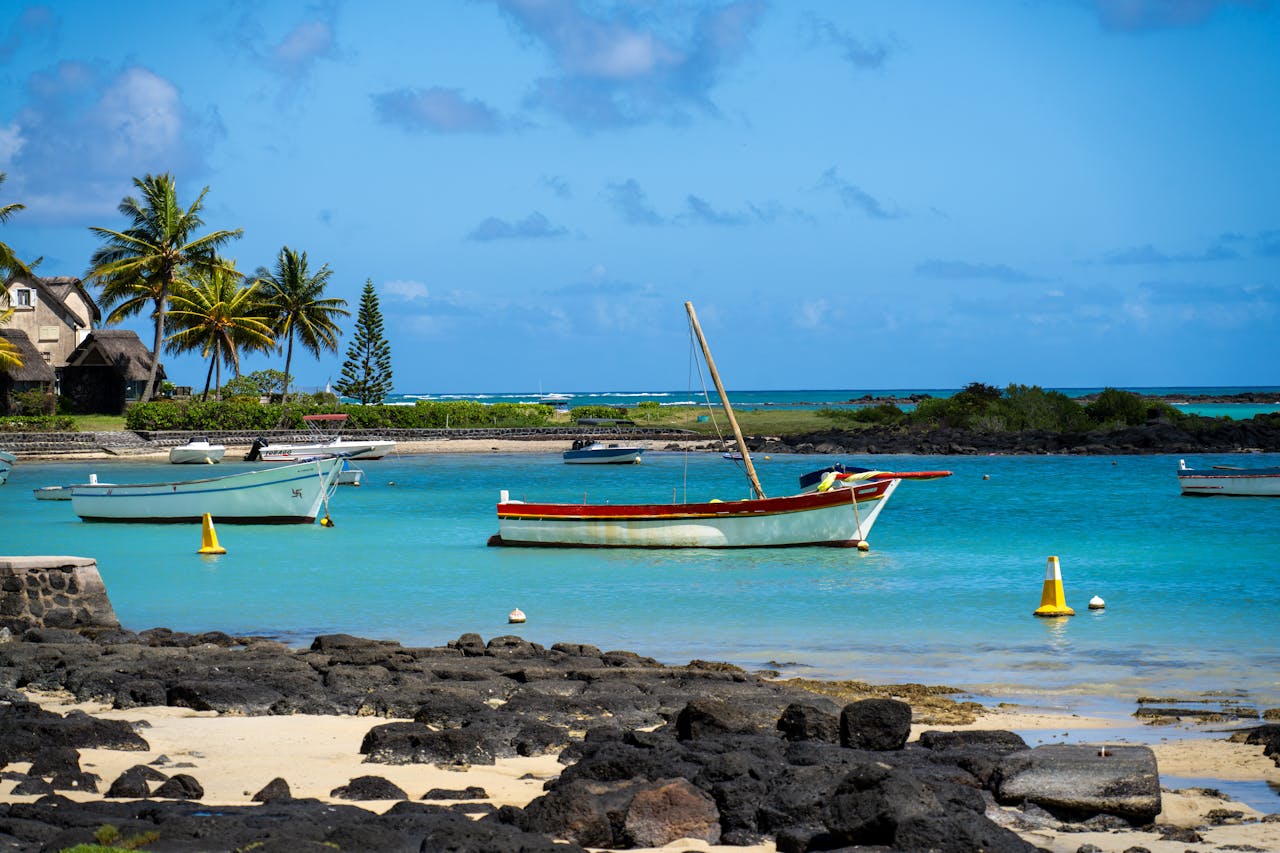
A small volcanic island in the southwestern Indian Ocean with a coral reef encircling nearly the entire coast, a mountain interior that turns green after rain, and a population that cooks some of the most underrated food in the world. This is the Indian Ocean that the Maldives crowd hasn't fully discovered — yet.
Why Mauritius, right now
Mauritius sits in the Indian Ocean about 1,200 miles east of Madagascar — geographically isolated, which is exactly why its culture and food are so distinct. The island was uninhabited until the 1600s and was subsequently colonized by the Dutch, French, and British in turn, with waves of African, Indian, and Chinese labor migration. That layering shows up on every restaurant menu, in every market, and in the mix of languages you hear on any given street corner in Port Louis.
The beaches are the reason most people come, and they hold up. The west coast around Flic en Flac and the north around Grand Baie have the calmer lagoon conditions — turquoise water inside the reef, white sand, palm trees doing what palm trees do. The east coast is windier and more dramatic. The south is rugged, largely undeveloped, and popular with surfers. A circuit of the island's coastline takes a full day by car and hits every geography in between.
What makes Mauritius stand out financially versus the Maldives or Seychelles: you can eat cheaply. A dholl puri (flatbread stuffed with split peas, a quintessentially Mauritian street food) costs 30 cents from a roadside vendor. A full lunch at a local Chinese-Mauritian restaurant in Port Louis runs $6–$10. Resort prices are at international luxury levels, but mid-range guesthouses start at $60–$90, and you can eat extremely well for $20 a day if you shop outside the resort perimeter.
Top 5 things to do in Mauritius
-
Snorkeling and diving the coral reefThe lagoon inside the barrier reef is calm, clear, and easy to access by boat. Blue Bay Marine Park in the southeast is one of the best snorkeling spots — designated protected area with dense coral and sea turtles. Boat trips run $25–$50 half-day. For scuba divers, the northwest coast has several wreck dives (including the deliberately sunk Stella Maru) accessible at all skill levels. Most dive centers charge $50–$70 for a guided dive including equipment.
-
The Black River Gorges National ParkThe mountainous southwest interior is protected national park — the last remaining native forest on the island. Trails range from easy 2-hour loops to strenuous full-day hikes. The Gorges Viewpoint is a 20-minute walk from the visitor center and worth it just for the canyon panorama. Macaque monkeys are everywhere along the trails. The Tamarin Falls hike (7 waterfalls, half-day) is the most popular but requires a local guide — arrange through your accommodation or the visitor center.
-
Port Louis Central Market and waterfrontThe capital's central market covers two floors with spices, textiles, street food, and local produce. Go in the morning (7–10am) before the tourist busses arrive. The waterfront Caudan development has the National History Museum and a good selection of Mauritian restaurants. Port Louis is not a major tourist destination in itself — it's the working capital — which makes the market feel authentic rather than staged. Don't leave without eating a dholl puri from a street vendor.
-
Chamarel: Seven Colored Earths and Rum DistilleryThe volcanic soil in the Chamarel plateau eroded into dunes that display seven distinct colors — ochre, red, violet, brown, and others that shift in different light. The geological phenomenon is in a small park ($10 entry) that takes 30 minutes to see. Pair it with a visit to Rhumerie de Chamarel, a boutique sugarcane rum distillery ($15 tasting, one of the better rum experiences in the Indian Ocean region). Chamarel is in the southwest, 40 minutes from most beach resorts on the west coast.
-
Ile aux Cerfs day tripA small uninhabited island off the east coast, accessible by 10-minute ferry from Trou d'Eau Douce ($8 return). The beaches are protected and calm. It gets crowded on weekends and around noon — arrive by 9am or stay until 4pm when the daytrippers thin out. Beach chairs and umbrellas available for rental ($5–$8). Multiple restaurants on the island; the seafood grill at mid-range spots runs $15–$25 for a full plate.
Mauritius also offers world-class deep-sea fishing, kitesurfing off the east coast, parasailing, and submarine tours of the reef. TripAdvisor's activity listings for the island are well-curated with verified reviews across all price points.
Explore Mauritius activities on TripAdvisor →Practical info for US travelers
| ✈️ Airport | MRU — Sir Seewoosagur Ramgoolam International Airport, in the southeast near Mahébourg. 45-minute drive to west coast beaches; 30 minutes to the east coast. Private transfers $30–$60; metered taxis similar price, negotiate before boarding. |
| 🛂 Visa | No visa required for US citizens. Entry stamp on arrival allows up to 60 days. Passport must be valid for 6+ months beyond your departure date. |
| 💵 Currency | Mauritian Rupee (MUR). $1 ≈ 46 MUR. Cards widely accepted at resorts, restaurants, and major shops. Carry cash for markets, street food, and smaller guesthouses. ATMs available at the airport and in towns. |
| 🗣 Language | English and French are both official. Mauritian Creole (Kreol) is the everyday language. English is understood almost universally in tourist areas. French is common at restaurants and in the north. |
| 🕐 Time zone | MUT (UTC+4). 9 hours ahead of EST, 12 hours ahead of PST. |
| 🌡 Climate | Subtropical. Summer (November–April) is hot and humid, 77–88°F, with occasional cyclone risk December–March. Winter (May–October) is drier and cooler, 68–77°F — ideal. The east coast is windier than the west year-round. |
| 🔌 Plugs | Type G (British 3-pin), 230V. US travelers need a plug adapter. Most resorts provide adapters on request. |
| 🛡 Safety | One of the safer destinations in the Indian Ocean region. Petty theft is the primary concern, mostly in Port Louis market and crowded beach areas. Keep valuables in your resort safe. Cyclone season (December–March) is real — check weather forecasts if traveling in this window. |
Best time to visit
May through October is the sweet spot — the Mauritian winter. Temperatures are a comfortable 70–78°F, humidity drops, and the sea conditions are ideal on the west and north coasts. June and July are the peak months for European visitors, so book accommodation 3–4 months ahead. September and October offer similar conditions with lower prices and fewer crowds.
November through April is summer — hotter (85°F+) and wetter, with the occasional cyclone December through March. Not all cyclones are disruptive, but it's a real risk worth checking at booking. January and February are statistically the highest-risk months. The east coast stays rougher through the summer; the west is more sheltered. If you're visiting in summer, plan around the west coast beaches and build in flexibility on your return date.
Where to stay
We've pinned top-rated hotels and guesthouses across Mauritius on an interactive map. Pick your dates and number of guests — the map loads live availability and prices.
Browse Mauritius hotels on the map →📅 Dates are pre-filled from today's best flight deal when available — double-check them before booking.
Getting around
Car rental is the most practical option for exploring beyond your beach resort. Roads are well-maintained, driving is on the left (British legacy), and the island is compact enough that you can cross it in 90 minutes. Daily car rental runs $35–$60. International licenses are accepted. The roundabouts are frequent and driving style is assertive — be prepared.
Buses connect all major towns and beaches for about $0.50 a ride — they exist and work but are slow, infrequent on weekends, and stop running around 8pm. Good for getting into Port Louis or between the north coast towns, not ideal for island-wide exploration. Taxis are widely available; agree on a fare before getting in. A taxi from Grand Baie to Port Louis runs $15–$20.
Ride-hailing apps are limited. Most hotel concierges can arrange trusted taxi drivers for island circuits — this is often the easiest option for full-day trips to Chamarel, Black River Gorges, or the east coast, where a driver waits while you explore and brings you home. Expect $60–$80 for a full-day driver.
Food & local tips
Mauritian food is one of the genuinely underrated cuisines in the world — Indian, Chinese, French, and African influences cooked together into something that doesn't taste like any of them individually. Dholl puri and roti (flatbreads with curried fillings) are the everyday street food. Bol renversé (rice topped with stir-fried vegetables and a fried egg, from the Chinese-Mauritian tradition) costs $3–$5 at local spots. The fish vindaye (local spiced fish dish) is excellent at any restaurant that makes it fresh.
All-inclusive resort packages in Mauritius can create a bubble where you never eat anything Mauritian. This is a mistake. The local food outside resort walls is dramatically better and costs a fraction. Ask your hotel for the nearest town with a local market — even one meal at a roadside dholl puri stand is worth making the effort for.
Rum is the thing to drink. Mauritius produces high-quality agricultural rum (rhum agricole style) from fresh sugarcane juice rather than molasses — notably different from Caribbean rum and underpriced on the world stage. Rhumerie de Chamarel and New Grove are the two most acclaimed local distilleries. A bottle of good Mauritian rum at a local shop runs $15–$25 and makes an excellent take-home.
Ready to fly to Mauritius?
Search live fares on Kiwi.com with flexible dates to find the best price from your city. Our AI keeps watching this route — set a price alert on the homepage to get notified when Mauritius drops to its historic low.
✈️ Search flights to Mauritius