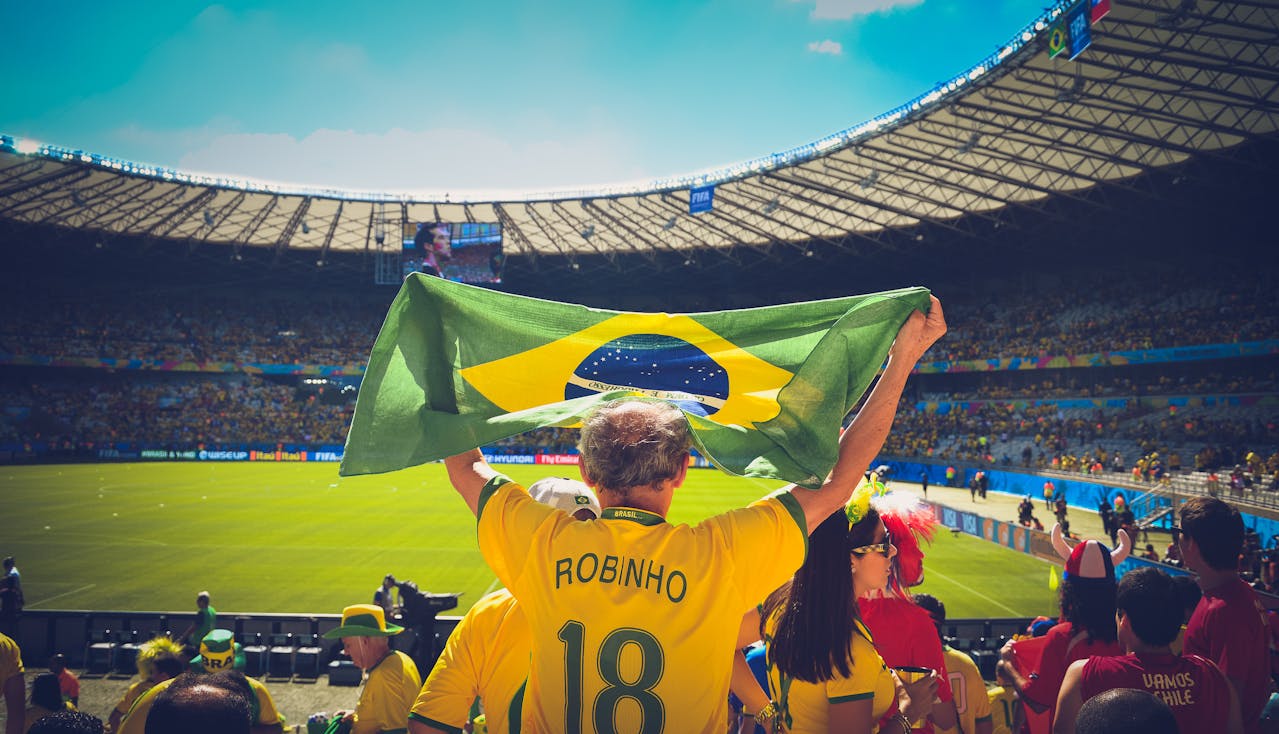
The 2026 World Cup kicks off June 11 in Mexico City — and three Mexican host cities (CDMX, Guadalajara, Monterrey) sit within a short flight of Caribbean beaches, Pacific surf towns, and Central American rainforest. This guide shows you how to build a 10–14 day trip that wraps a match day around actual vacation time in Mexico, Costa Rica, or Panama.
- Mexico's three WC cities are all within 2–4 hours of world-class beaches: Puerto Vallarta from Guadalajara, Riviera Maya from CDMX, Playa Miramar from Monterrey.
- Cheap connecting flights link Mexico City to San José (Costa Rica) and Panama City in under 4 hours — making a multi-country trip surprisingly doable.
- June–July is green season in Central America: lower hotel rates, fewer crowds, and landscapes at their most dramatic.
- Panama uses the US dollar, Costa Rica accepts cards everywhere, and Mexico's peso is a bargain — your budget stretches further than you think.
Here's a thought that doesn't occur to most football fans planning their World Cup trip: you're already flying to Latin America. The hardest part — the transatlantic or cross-continental flight, the time off work, the mental commitment to go — is already done. So why fly home the day after the match?
Mexico, Costa Rica, and Panama sit on the same travel corridor, connected by cheap flights that rarely top $200 one-way. The three countries share a timezone (roughly), similar climates in June, and enough variety between them to fill a month — though 10 to 14 days is the sweet spot. What follows is a practical framework for stitching a World Cup match day into a real vacation. Not a "36 hours in Mexico City" listicle. An actual trip.
Why Mexico's World Cup Cities Are the Perfect Launchpad
FIFA picked three Mexican host cities for the 2026 tournament: Mexico City (Estadio Azteca), Guadalajara (Estadio Akron), and Monterrey (Estadio BBVA). Each one sits in the interior of the country, away from the coast — but close enough to incredible beach and jungle destinations that you can be on sand within a day of the final whistle.
Mexico City hosts the opening match on June 11 (Mexico vs. South Africa) and several group stage games through late June, including a Round of 32 match on June 30. Guadalajara gets four matches featuring heavyweights like Colombia, Uruguay, and Spain. Monterrey picks up Group A and Group F fixtures plus a Round of 32 clash.
The key insight: these cities are not isolated. Mexico City's airport (MEX) is the largest hub in Latin America. From there, you can reach Cancún in 2 hours, San José, Costa Rica in 3.5 hours, or Panama City in under 4. Guadalajara is a short 45-minute flight or 4-hour drive from Puerto Vallarta on the Pacific coast. Monterrey is about 5 hours from the Gulf coast beaches around Tampico and Playa Miramar.
Guadalajara → Puerto Vallarta: Catch Mexico vs. South Korea on June 18 at Estadio Akron, then drive (or fly in 45 min) to PV for Pacific sunsets and Sayulita surf. Mexico City → Riviera Maya: Watch the opening match June 11, spend a day exploring CDMX, then hop a 2-hour flight to Cancún for cenotes, Tulum ruins, and Caribbean water. Monterrey → Costa Rica or Panama: After the June 24 fixtures, connect through CDMX and be in Manuel Antonio or Bocas del Toro by the next afternoon.
Option 1: The Mexico-Only Trip (7–10 Days)
This is the simplest version. You fly into one of the three host cities, catch your match, and then head straight for the coast. No second passport stamp, no extra flights. Just a bus or a short domestic hop.
Guadalajara + Pacific Coast Route
Guadalajara is arguably the best base for this combo. The city itself is a destination — tequila was invented in a town 45 minutes northwest, mariachi was born here, and the food scene is one of Mexico's most underrated. Spend a day or two exploring the historic center, the Hospicio Cabañas (a UNESCO site), and the Mercado San Juan de Dios before match day.
After the game, head west. Puerto Vallarta is the obvious choice: a developed resort town on Banderas Bay with golden sand beaches, the cobblestoned Zona Romántica neighborhood, and easy access to water taxis that take you to secluded coves like Playa Las Ánimas and Yelapa. If you want something less crowded, drive an hour north of PV to Sayulita — a surf town with a bohemian edge that's become famous for its laid-back food scene and consistent breaks.
For jungle? Drive three hours south of PV along the Costalegre, Jalisco's underexplored Pacific coastline. You'll pass through Boca de Iguanas, Tenacatita, and the lush hills around Careyes — places where the Sierra Madre drops straight into the ocean and howler monkeys outnumber tourists. Stop at Manzanillo for the beaches of the Santiago Peninsula, especially La Audiencia, a small cove with calm, crystal-clear water framed by tropical vegetation.
Mexico City + Caribbean Route
CDMX deserves time on its own. If you've never been, at least two full days: one for the historic center (Zócalo, Palacio de Bellas Artes, Chapultepec Castle) and one for neighborhoods like Roma, Condesa, and Coyoacán. Eat tacos al pastor from a street cart at 11pm. Visit the Museo Nacional de Antropología. Let the city surprise you.
Then fly east. A Cancún flight costs as little as $60 on Volaris or VivaAerobus, and from there the entire Riviera Maya opens up. Skip the resort strip if you can — Tulum offers clifftop ruins overlooking turquoise water, cenotes (natural sinkholes) you can swim in, and a growing food scene along the beach road. Isla Holbox, off the northern coast of the Yucatán, is car-free and feels like a different planet. From June through September it's one of the few places in the world where you can swim alongside whale sharks.
Option 2: Mexico + Costa Rica (10–14 Days)
This is where the trip starts getting interesting. You catch your World Cup match in Mexico, spend a few days at the beach or exploring the city, and then fly south to Costa Rica for a completely different landscape.
Direct flights from Mexico City to San José (SJO) run daily on Aeromexico and Volaris, usually under $180 one-way. Flight time is about 3.5 hours. From San José, the whole country is within reach — and Costa Rica is small enough that you can see both the jungle interior and the coast in a week.
The Arenal–Manuel Antonio Classic
This is the most popular route for first-time visitors, and for good reason. From San José, drive three hours northwest to La Fortuna, the adventure town at the foot of Arenal Volcano. The volcano's cone looms over everything — restaurants, hot springs, hanging bridge trails. This is where you zip-line over the canopy, raft the Pacuare River, and hike through cloud forest looking for toucans, sloths, and howler monkeys. Stay at an eco-lodge with volcanic hot springs. Spend three nights.
Then drive south to the Pacific coast and Manuel Antonio National Park. This is where jungle meets beach in the most literal way: white-tailed capuchin monkeys hop between trees right above the sand, three-toed sloths hang from branches overlooking the tide pools, and the hiking trails open onto coves with water so clear you can see fish from the shore. Book a guided morning hike — the naturalist guides here are some of the best in Central America, and they'll spot animals you'd walk right past.
June and July are Costa Rica's "green season" — meaning afternoon rain showers, lower hotel rates (sometimes 30–40% off), and dramatically fewer crowds at popular spots like Manuel Antonio. Mornings are usually sunny, the jungle is at its greenest, and migratory bird species arrive that you won't see during dry season. Pack a light rain jacket and embrace it.
The Caribbean Alternative
If you want a vibe that's completely different from the Pacific coast, head to Costa Rica's Caribbean side instead. Puerto Viejo de Talamanca is a small town in Limón province where reggae plays from beach bars, the Afro-Caribbean food (rice and beans cooked in coconut milk, jerk chicken, rondon stew) is spectacular, and the nearby Cahuita National Park lets you snorkel on the country's best coral reef.
Nearby beaches — Playa Cocles for surfing, Punta Uva for calm swimming, Manzanillo for a quieter stretch backed by the Gandoca-Manzanillo Wildlife Refuge — give you a different beach every day. And the jungle is right there: the Bribri indigenous reserve offers chocolate-making tours, and the Kekoldi Indigenous Territory runs guided birdwatching walks.
Option 3: Mexico + Panama (10–14 Days)
Panama is the dark horse of this trip. Most travelers don't think of it as a beach-and-jungle destination, but it absolutely is — and the combination of Caribbean islands, rainforest, and a cosmopolitan capital makes for a wildly underrated vacation.
Flights from Mexico City to Panama City (PTY) run daily on Copa Airlines, with fares frequently under $200. Flight time is just under 4 hours. And once you're in Panama, a small but important detail: the currency is the US dollar. No exchange rates, no mental math, no getting shortchanged.
Panama City + San Blas Islands
Panama City itself is worth a day or two. The Casco Viejo (Old Town) is a UNESCO World Heritage quarter with colonial architecture, rooftop bars, and a culinary scene that blends Panamanian, Peruvian, and Caribbean influences. The Panama Canal is, well, the Panama Canal — watching a container ship glide through the Miraflores Locks never gets old. And the Biomuseo, designed by Frank Gehry, tells the story of how the isthmus of Panama changed life on Earth when it rose from the ocean floor.
From the capital, the San Blas Islands (Guna Yala) are shockingly close — about 3 hours by 4×4 and boat, or 40 minutes by small plane. This is an autonomous territory governed by the Guna people, a chain of 365 tiny islands with some of the clearest water in the Caribbean. Most visits are all-inclusive: a local family hosts you in a simple wooden cabin or overwater hut, cooks your meals (fresh fish, coconut rice, plantains), and takes you island-hopping by boat. There's no Wi-Fi, no resort pool, no bar playing Top 40 hits. Just sand, water, and silence.
Two or three nights in San Blas is enough. The accommodations are basic — thin mattresses, shared bathrooms, bucket showers with seawater — but that's the whole point. You'll snorkel over starfish, wade through knee-deep sandbars between islands, and eat dinner under a thatched roof while the sun sets behind the mainland mountains.
Bocas del Toro: The Other Side
If San Blas sounds too rustic, Bocas del Toro offers a similar Caribbean-island feel with more infrastructure. Located near the Costa Rica border, this archipelago has surf breaks, dive sites, jungle hikes, and a scruffy-charming main town on Isla Colón with hostels, boutique hotels, beach bars, and surprisingly good restaurants.
The highlights: Red Frog Beach on Isla Bastimentos (named after the tiny red poison dart frogs that live in the nearby jungle), the Zapatilla Islands for postcard-perfect white sand and coral gardens, and Starfish Beach for snorkeling. You can rent a boat for a day of island-hopping, take an ATV through the jungle interior of Isla Colón, or just grab a hammock and read. Bocas is also a legitimate surf destination — spots like Dumpers and Silverbacks get consistent swells from November through April, though June and July can still deliver rideable waves.
For the ambitious: fly into Guadalajara for a match, drive to Puerto Vallarta for 3 nights on the Pacific coast, fly back to Mexico City and connect to San José, spend 4 nights doing Arenal + Manuel Antonio, then overland to Panama's Caribbean coast for 3 nights in Bocas del Toro (it's right on the border). Fly home from Panama City. Total: 12–14 days, three countries, two coasts, volcano, jungle, and a World Cup match. Average cost: roughly $2,500–3,500 per person including flights, lodging, and experiences.
Practical Tips: Booking, Budget, and Timing
Match Tickets
Buy through FIFA's official portal. Group stage tickets for Mexican venues start around $70 for Category 3. Avoid reseller sites — FIFA voids unauthorized tickets and you won't get in.
Flight Strategy
Book the international legs early (US/Europe to Mexico). Save domestic and regional hops (CDMX→PV, CDMX→SJO) for later — Central American fares drop closer to departure. Use Volaris, VivaAerobus, and Copa for budget options.
Accommodation
WC host cities will be expensive June 11–30. Book hostels or Airbnbs outside the stadiums. Beach destinations in Costa Rica and Panama drop 30–40% in green season — use this to offset match-city costs.
Weather Reality
Expect afternoon showers June–July across all three countries. Mornings are usually clear. Pack a packable rain jacket and quick-dry clothes. Humidity will be high — embrace it or stick to the Pacific coast, which is slightly drier.
Sample Itinerary: 12 Days, 2 Countries, 1 Match
Here's a concrete example you can adapt. This one assumes a Guadalajara match on June 18 (Mexico vs. South Korea, Estadio Akron, 9pm local).
Day 1–2: Guadalajara. Arrive, explore the historic center, visit the Hospicio Cabañas, eat birria tacos. Day 2: tequila country day trip to the town of Tequila (1 hour by bus or the scenic José Cuervo Express train). Rest up for the match.
Day 3: Match day. Morning free. Wander the Mercado San Juan de Dios, grab lunch at a local fonda. Head to the stadium mid-afternoon for atmosphere. Watch Mexico play. Celebrate (or commiserate) in the streets of Guadalajara until the small hours.
Day 4–6: Puerto Vallarta. Morning flight or drive to PV. Check into a guesthouse in the Zona Romántica. Day 5: water taxi to Yelapa for beach and waterfall hike. Day 6: Sayulita day trip for surfing and ceviche. Evening: sunset cocktails on the Malecón.
Day 7: Fly to San José, Costa Rica. Morning flight PV → CDMX → SJO. Arrive by afternoon. Overnight in Escazú or San José. Pick up a rental car.
Day 8–9: Arenal / La Fortuna. Drive to La Fortuna (3 hours). Day 8: hanging bridges trail and volcanic hot springs in the evening. Day 9: guided jungle hike at the base of Arenal, waterfall visit, white-water rafting on the Balsa River.
Day 10–11: Manuel Antonio. Drive to the Pacific coast (4.5 hours via the scenic route through San Ramón). Day 10: guided morning hike through Manuel Antonio National Park — capuchins, sloths, iguanas, white sand coves. Afternoon on the beach. Day 11: kayaking or catamaran sunset tour.
Day 12: Return. Morning drive to SJO (3 hours). Fly home.
What About Panama at the World Cup?
A quick note for fans of the Panamanian national team specifically: Panama is in Group L alongside England, Croatia, and Ghana. Their group stage matches are scheduled for Toronto (June 17 vs. Ghana, June 23 vs. Croatia) and East Rutherford, New Jersey (June 27 vs. England). So Panama doesn't play in Mexico — but you could absolutely watch Panama in Toronto or New York and then fly south to Panama for the beach-and-jungle portion of your trip. Toronto to Panama City is about 5.5 hours on a direct Copa flight.
Alternatively, if you just want the Latin American experience without a specific team allegiance, you can catch any of the matches in Mexico City, Guadalajara, or Monterrey — there are games featuring Brazil, Colombia, Argentina, Spain, Uruguay, and more — and then continue south to Panama's Caribbean coast.
The Money Part: What Will This Actually Cost?
Here's a rough breakdown for a 12-day Mexico + Costa Rica trip, per person, based on mid-range travel (not backpacking, not luxury):
- International flight (US to Guadalajara, return from SJO): $350–600 depending on origin city and booking window.
- Regional flights (PV–CDMX–SJO): $150–250 total.
- Accommodation (11 nights, mix of guesthouses, boutique hotels, eco-lodges): $500–900.
- World Cup ticket (Group stage, Category 3): $70–120.
- Food and drink (12 days): $300–500. Street food and markets in Mexico are absurdly cheap. Costa Rica is pricier but still manageable.
- Activities and tours (Arenal hike, Manuel Antonio guide, tequila tour, water taxis): $200–350.
- Costa Rica rental car (5 days): $150–250 with insurance.
- Miscellaneous (transport, tips, SIM card, gear): $100–200.
Total range: roughly $1,800–3,200 per person, depending on how early you book, how much you splurge on accommodation, and whether you're flying from JFK or from Boise. The Panama variant adds about $200 for the regional flight and saves $100–150 on accommodation (Panama beach lodges tend to be cheaper than Costa Rica's). Either way, you're looking at a fully loaded two-week vacation that includes a World Cup match for less than what a lot of people spend on an all-inclusive week in Cancún.
One Last Thing: Don't Overthink It
The biggest mistake people make with a trip like this is trying to see too much. Pick one match. Pick one beach destination. Pick one jungle destination. Leave buffer days for the unexpected — a local festival you stumble into, a beach you don't want to leave, a rainstorm that turns into a four-hour conversation at a cantina.
Latin America rewards slow travel. The bus that breaks down becomes the story. The taco stand with no English menu becomes the best meal. The hostel stranger becomes the friend you meet up with in Panama three years later. Build your itinerary with enough structure to avoid logistical chaos, and enough slack to let the trip surprise you.
You've got a World Cup ticket and a passport. The rest is just details.
Ready to Book Your World Cup Escape?
Compare flights to Mexico City, Guadalajara, San José, and Panama City. We scan 800+ airlines for the lowest fares — updated hourly.
🔍 Search Cheap Flights