Cheap Flights to Vienna from the USA
Imperial palaces, world-class concert halls, Klimt paintings, and coffee houses where people sit for three hours with one Melange — Vienna operates at a different pace than the rest of Europe, and that's exactly the point. Here's the cheapest fare our AI has found, plus everything you need to actually plan the trip.
Why Vienna, right now
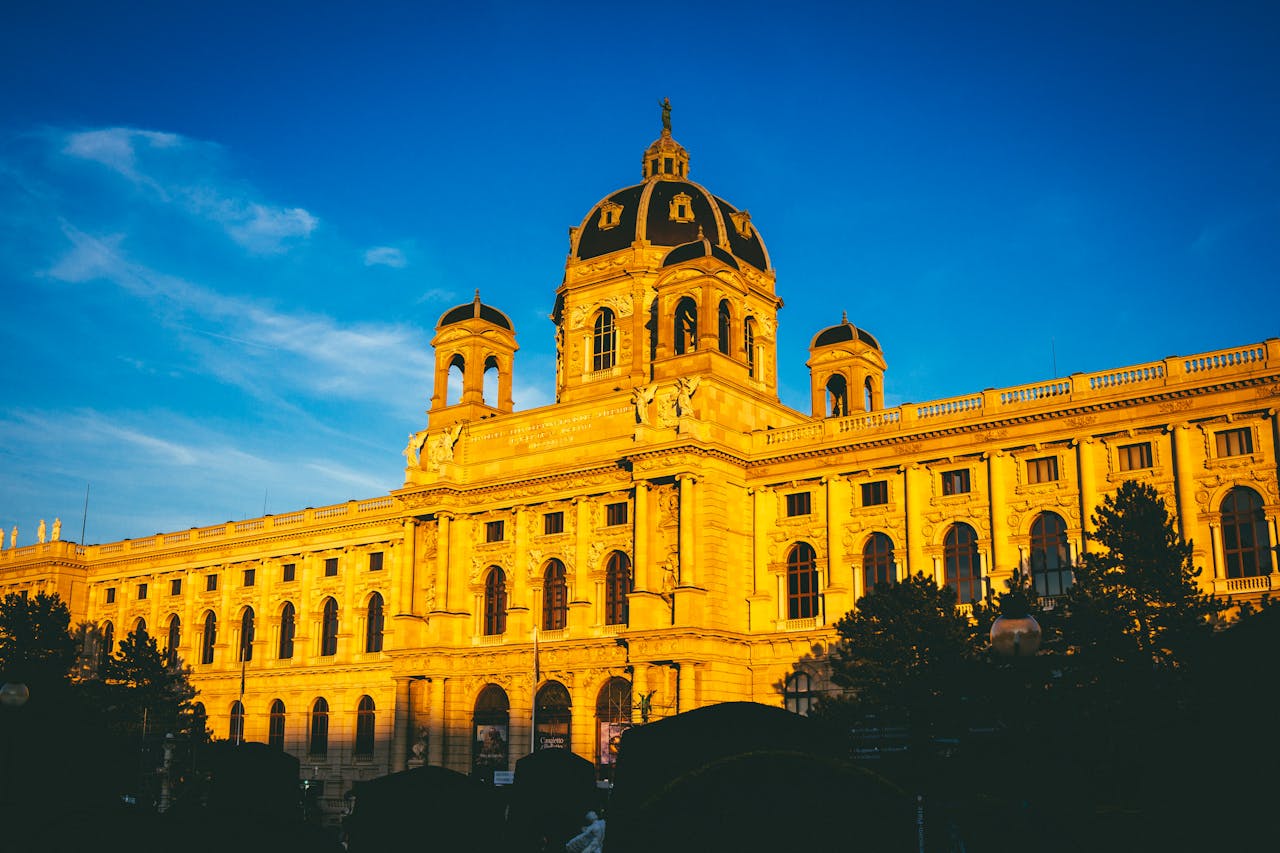
Vienna is the city that takes "quality of life" seriously enough to win that ranking for the 15th year in a row. It's clean, punctual, and built around the idea that public space should be genuinely pleasant. The Ringstrasse — the grand boulevard Emperor Franz Joseph built to replace the old city walls — is two miles of opera houses, museums, parliament buildings, and parks, all free to walk through at any hour. The Kunsthistorisches Museum alone, with its Habsburg art collection, is one of the five best art museums in Europe.
Prices sit between Western and Eastern Europe. A coffee and cake at a Viennese Kaffeehaus costs €7–€10, but you can sit at the marble table for as long as you like and nobody will rush you. A Würstelstand (sausage stand) lunch is €4–€6. Dinner at a Beisl (neighborhood restaurant) runs €15–€22 for a full plate of Wiener Schnitzel or Tafelspitz with sides. The Vienna City Card gives unlimited transit for 24–72 hours and discounts at most museums ($17–$29).
Vienna is also an outstanding base for Central Europe day trips. Budapest is 2.5 hours by train (€19–€40 on early bookings), Bratislava is 1 hour ($15 by bus), Prague is 4 hours. If you're doing a multi-city Central European trip, Vienna as the hub makes geographic and logistical sense.
Top 5 things to do in Vienna
- See the Klimt collection at the Belvedere The Upper Belvedere palace holds Klimt's The Kiss — one of the most recognized paintings in Western art — along with the rest of his Vienna-period work. Tickets are €16–€22 depending on which building; both palaces plus the gardens are worth the combined ticket. Go on a weekday morning; by 11am the room with The Kiss gets very crowded. The baroque garden between the two palace buildings is free to walk through.
- Spend a morning in a Viennese Kaffeehaus Café Central (Herrengasse 14) and Café Landtmann (near the Burgtheater) are the grand historic examples — marble columns, newspaper racks, waiters in black vests. Order a Melange (espresso with steamed milk), a Verlängerter (longer, milder espresso), or a Einspänner (black coffee in a glass with whipped cream). The ritual is the point. Budget €8–€12, stay an hour, read a newspaper.
- Walk through Schönbrunn Palace and gardens The Habsburg summer residence — 1,441 rooms, gardens that run up a hill to a Roman-style colonnade with a panorama of Vienna. The gardens are free; palace tours run €16–€26 depending on which rooms you include. Skip the full Grand Tour unless you're a serious history buff — the Imperial Tour (40 rooms) covers the essentials in 45 minutes. The hilltop Gloriette terrace is free and the view is worth the 15-minute uphill walk.
- Attend a concert at the Musikverein or Staatsoper The Vienna Philharmonic plays in the Musikverein's Golden Hall — one of the acoustically perfect concert halls in the world. Standing room tickets (Stehplätze) go on sale 80 minutes before the performance for €4–€6. The Staatsoper (State Opera) has the same standing room system — €3–€10. These are world-class performances at the price of a coffee. Book tickets online for seats; standing room is day-of only.
- Cycle along the Danube Canal The Donaukanal (Danube Canal) running through the city has been transformed into Vienna's outdoor living room — street art, beach bars, café barges, and a flat cycling path that runs for miles. Rent a WienMobil bike (€1/hour) and cycle from the city center toward the old Danube for an afternoon that feels nothing like a typical tourist day. The graffiti walls on the canal embankment are some of the best legal street art in Europe.
Looking for Vienna concert tickets, guided Schönbrunn tours, or Danube river cruises? Browse activities and experiences with real traveler reviews.
Explore Vienna activities on TripAdvisor →Practical info for US travelers
| Airport | VIE — Vienna International Airport (Schwechat), 11 mi from city center. CAT (City Airport Train) runs to Wien Mitte in 16 minutes for €14.90 one-way; S-Bahn S7 takes 25 minutes for €4.20. |
|---|---|
| Visa | No visa needed for US passport holders (90 days in Schengen area) |
| Currency | Euro (€). $1 ≈ €0.93 in 2026. Cards accepted everywhere. Tipping is modest — round up or leave 5–10% at restaurants. |
| Language | German (Austrian dialect). English widely spoken everywhere tourists go. A "Bitte" (please) and "Danke" (thank you) are appreciated. |
| Time zone | CET (UTC+1), 6 hours ahead of EST. CEST (UTC+2) in summer. |
| Climate | Continental. Spring 50–65°F, summer 75–85°F (can spike to 95°F in July), autumn mild, winter cold with snow at 25–38°F. |
| Plugs | Type C/F, 230V. US travelers need a plug adapter (no voltage converter needed for standard electronics). |
| Safety | One of the safest capitals in Europe. Standard urban awareness applies — pickpockets exist around major tourist sites and on the U-Bahn. |
Best time to visit
April, May, September, and October hit the sweet spot. Spring brings the Prater park chestnut blossoms and outdoor café season; fall turns the vineyards in the Vienna Woods gold and brings Sturm (young, semi-fermented wine) to every Heuriger (wine tavern) in the hills. Crowds are manageable, prices reasonable, and the concert season is in full swing. Our AI consistently spots the best fares from US airports landing in these windows.
December is a legitimate contender if you don't mind cold (28–38°F) — Vienna's Christmas markets (Christkindlmarkt on Rathausplatz, Spittelberg market in the 7th) are genuinely excellent and not the same commercial experience as most European Christmas markets. January and February are cold, quiet, and cheap — museums almost to yourself, hotel prices at annual lows, and the Vienna Opera Ball in February if you want to see Vienna at its most formally absurd.
Our models tracking VIE fares show the most reliable dips in late January, early February, and mid-November. Connecting via Frankfurt, Amsterdam, or London often runs 15–25% cheaper than direct flights from US hubs — worth checking both options when you search.
Where to stay
Vienna's first district (Innere Stadt) holds most of the major sights — here's how the surrounding neighborhoods compare.
We've pinned our top-rated hotels across Vienna on an interactive map. Pick your dates and number of guests — the map loads live availability and prices.
Browse Vienna hotels on the map →📅 Dates are pre-filled from today's best flight deal when available — double-check them before booking.
Getting around
Vienna's public transit — U-Bahn (metro), trams, and buses — runs with Austrian-level precision. A single ticket is €2.40; a 24-hour pass is €8; a 72-hour pass is €17.10. The Vienna City Card adds museum discounts to the 24/48/72-hour transit pass and usually pays for itself within two days of sightseeing. Validate your ticket before boarding or face a €105 fine — inspectors work in plain clothes.
The inner city (1st District) is extremely walkable — most major sights sit within a 20-minute walk of each other. The Ringstrasse loop is 3.4 miles and takes about 90 minutes at a relaxed pace, passing the Opera, Parliament, Rathaus, Burgtheater, and both major museum buildings. Tram D circles most of the ring and doubles as a sightseeing loop for €2.40.
Taxis and Uber/Bolt operate throughout Vienna. From the airport, the CAT train (€14.90) is fastest; the S7 commuter rail (€4.20) is the budget option; taxis run €35–€45 flat rate.
Food & local tips
Viennese cuisine is heavier than its geographical neighbors — Wiener Schnitzel (veal or pork, breaded, pan-fried), Tafelspitz (boiled beef with horseradish and apple sauce), Gulasch (beef stew, more Austrian than Hungarian at this point), and Kaiserschmarrn (shredded pancake with plum sauce) are the classics. A proper Schnitzel at a Beisl costs €16–€22. The same dish from a Würstelstand won't happen — but a Käsekrainer (cheese-filled sausage, Vienna's best street food) is €4–€5 and genuinely excellent at 11pm.
A Heuriger is a wine tavern in the wine-growing villages on the city's outskirts — Grinzing, Neustift am Walde, Nussdorf. They serve their own young wine (Grüner Veltliner or Gemischter Satz), cold platters of bread, cheese, and cured meats, and nothing else. Tram D to Nussdorf, walk uphill, find one with a pine branch hanging above the door (the sign it's open). A jug of local wine and a cold plate for two costs €20–€30. This is what Viennese families do on summer evenings and almost no tourists find it.
For more central eating: the Naschmarkt (Vienna's main open-air market, tram stop Kettenbrückengasse) is open Monday–Saturday with excellent Turkish, Middle Eastern, and Austrian food stalls for €6–€12 a plate. Avoid the sit-down restaurants on the market edge — they're overpriced and mediocre. Eat from the stands, standing up, like everyone else.
Ready to fly to Vienna?
Search live fares on Kiwi.com with flexible dates to find the best price from your home airport. Our AI watches this route continuously — check the homepage for the latest VIE deal alert.
✈️ Search flights to Vienna