Cheap Flights to Marrakesh from the USA
Africa's most intense city — a 1,000-year-old medina packed into a few square miles, with rooftop terraces, spice markets, and riads that open onto sky-lit courtyards you never expected. Here's the cheapest fare our AI detected, plus everything you need to survive and enjoy the trip.
Why Marrakesh, right now
Marrakesh sits at the edge of the Sahara and has been doing business for a millennium. The medina — the old walled city — is a UNESCO World Heritage Site and also one of the most disorienting places on earth. Streets that are 6 feet wide split into three, then five, then dead-end at a spice seller or a carpenter's workshop that's been there for generations. You can get genuinely lost within 200 feet of your riad. Most people find this thrilling after the first 20 minutes of panic.
The value is real. A good riad (traditional courtyard house converted to a guesthouse) runs $80–$150 a night for a room that would cost $400 in a comparable boutique hotel in Europe. A full sit-down lunch at a restaurant in the medina — tagine, bread, mint tea — is $8–$12. A freshly squeezed orange juice from the Djemaa el-Fna square costs 50 cents. The city has upgraded its infrastructure without inflating its prices, which makes it unusually accessible for an international destination this dramatic.
Direct flights from the US are limited — most routes connect through Europe or Casablanca — which historically kept prices high. That's changing. Flight deals to Marrakesh (RAK) are now appearing in the $650–$900 range from East Coast hubs, which makes the three-hour flight from a European connection worth building into an itinerary. Add a night in Lisbon or Madrid on the way and you're essentially getting two trips for one transatlantic fare.
Top 5 things to do in Marrakesh
-
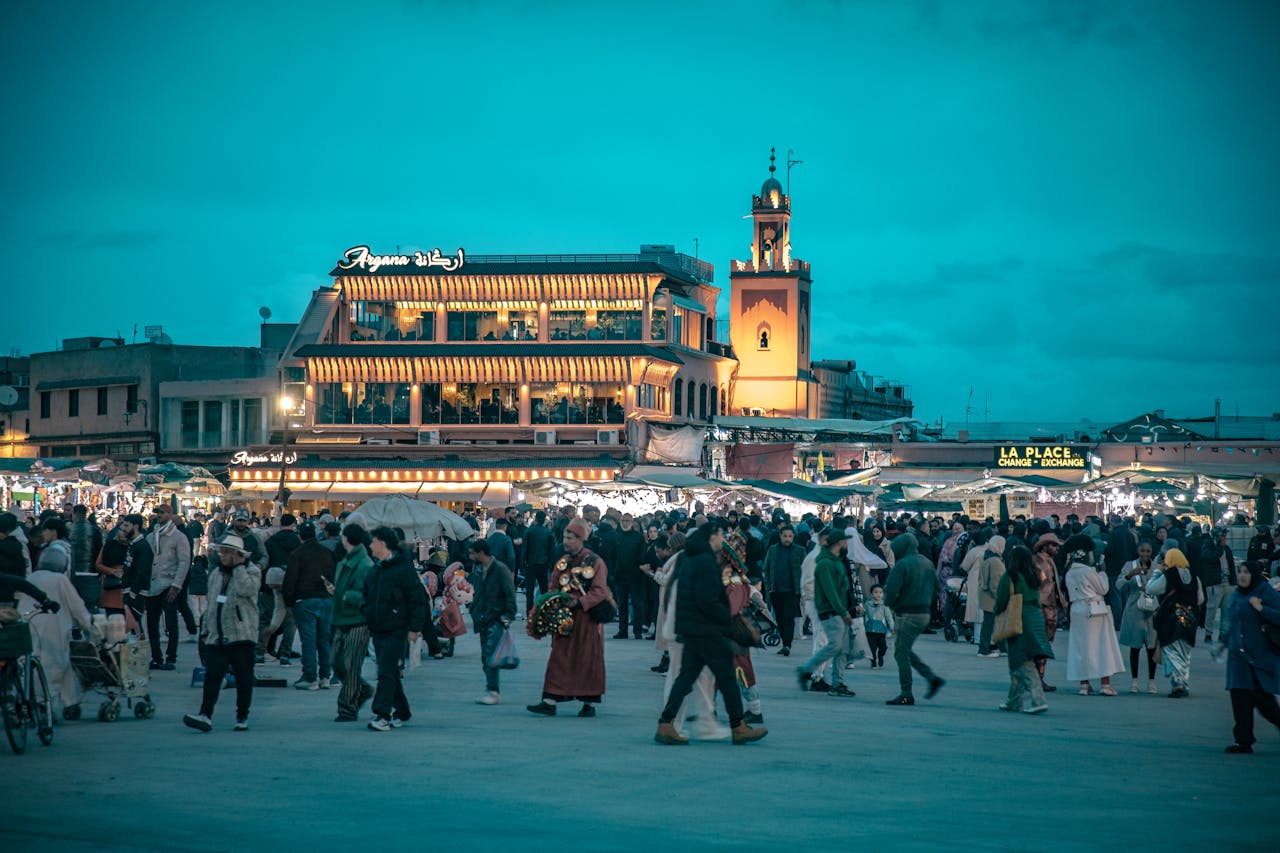
Djemaa el-Fna at duskThe main square transforms around 6pm — snake charmers and storytellers give way to dozens of food stalls, smoke, and noise. Arrive at 5:30pm to get a seat at one of the rooftop cafes overlooking the square before the crowd thickens. Admission is free; a mint tea at a rooftop cafe runs $2–$4. Skip the food stalls your first evening (overwhelming) and come back on night two when you know what to order.
-
Jardin Majorelle & Yves Saint Laurent MuseumThe cobalt-blue garden designed by French painter Jacques Majorelle and later owned by Yves Saint Laurent is genuinely beautiful and not what most people expect Marrakesh to look like. The adjacent YSL Museum covers fashion and North African influence. Combined ticket runs about $16. Go early — gates open at 8am — the garden gets crowded by 10am. The adjacent Berber Museum is included in the garden ticket and often skipped; don't skip it.
-
Ben Youssef MadrasaA 14th-century Islamic school with some of the finest tilework and carved plaster in Morocco. Entry is around $3. Come at 9am before tour groups arrive. The courtyard is small enough that 30 people makes it feel packed — timing matters. This is one of the most photographed interiors in the country, and the photos don't do it justice in person.
-
Day trip to the Atlas MountainsThe High Atlas is 40 minutes from Marrakesh by car. The valley town of Imlil sits at 5,500 feet and is the base for trekking toward Jebel Toubkal (13,671 ft, North Africa's highest peak). You don't need to summit — a half-day hike through Berber villages to a mountain lodge runs $30–$60 with a guide. A private driver from Marrakesh costs $50–$80 round-trip. Book through your riad, not a tout in the square.
-
A traditional hammamHammams — public bathhouses — are genuinely local and genuinely relaxing. A traditional hammam experience (steam room, black soap scrub, massage) runs $15–$40 at mid-range spots near the medina; touristy "hammam experiences" cost three times that. Ask your riad for a recommendation for a place that serves locals, not just visitors. Go in the morning when it's quieter. Bring flip-flops.
Marrakesh has cooking classes, desert excursions, pottery workshops, and enough souks to occupy a week. TripAdvisor's activity listings for the city are unusually well-curated — good for finding vetted guides and small-group experiences that skip the commission-heavy touts.
Explore Marrakesh activities on TripAdvisor →Practical info for US travelers
| ✈️ Airport | RAK — Marrakesh Menara Airport, 3.5 miles from the city center. Taxis to the medina are fixed-rate ~$5–$8; negotiate before getting in. |
| 🛂 Visa | No visa required for US citizens. Passport must be valid for 6+ months. On arrival you'll get a 90-day entry stamp. |
| 💵 Currency | Moroccan Dirham (MAD). $1 ≈ 10 MAD. ATMs are widely available in Gueliz (new city); limited in the medina. Many riads and restaurants accept cards, but cash is essential in the souks. |
| 🗣 Language | Darija (Moroccan Arabic) and Berber. French is widely spoken in hotels and restaurants. English is increasingly common in tourist areas but not universal. |
| 🕐 Time zone | WET (UTC+1 year-round since 2018). 6 hours ahead of EST, 9 hours ahead of PST. |
| 🌡 Climate | Semi-arid. Spring and fall are ideal: 68–82°F. Summer (June–August) hits 100°F+ regularly in the medina — genuinely brutal at midday. Winter nights drop to 40°F. |
| 🔌 Plugs | Type C/E, 220V. US travelers need a plug adapter. Power banks recommended for full days in the medina. |
| 🛡 Safety | Generally safe for tourists. Petty theft and aggressive hustling in the medina are the main concerns — ignore anyone who "just wants to practice English" and approaches you unsolicited. Keep your phone in your front pocket. The rest of the city is calm. |
Best time to visit
March through May and September through November are the sweet spots. Temperatures hover between 65–85°F, the light is soft, and the crowds haven't hit peak European summer levels. The rose harvest in the Dadès Valley runs late April to early May — not in Marrakesh itself, but day-trip distance and worth timing around if you can.
Avoid July and August unless you're specifically heat-adapted. The medina in 105°F with no shade is a genuine endurance test — riads cool down significantly, but venturing out between noon and 4pm is uncomfortable for most visitors. December through February is mild by day (55–65°F) but cold at night, and some smaller restaurants and guesthouses reduce hours or close.
Where to stay
We've pinned our top-rated hotels and riads across Marrakesh on an interactive map. Pick your dates and number of guests — the map loads live availability and prices.
Browse Marrakesh hotels on the map →📅 Dates are pre-filled from today's best flight deal when available — double-check them before booking.
Getting around
Inside the medina, you walk. That's not optional — the streets are too narrow for cars in most sections, and the layout doesn't follow logic that maps can easily represent. Download an offline map (Maps.me or Google Maps offline) before you go. Your riad will give you a hand-drawn map on arrival; take it seriously, it's probably more accurate than satellite imagery.
Between neighborhoods, petits taxis (small tan-colored cabs) are cheap and everywhere. A ride from the medina to Gueliz costs $2–$4. Negotiate the fare upfront or insist on the meter — most drivers will use it if you ask. Careem (the Middle East/Africa equivalent of Uber) operates in Marrakesh and is a good alternative for fixed pricing.
For day trips to the Atlas Mountains or Ouarzazate, hire a private driver through your riad. Prices are negotiable but expect $60–$100 for a full-day hire. Do not use drivers who approach you in the Djemaa el-Fna — book through accommodation staff who have vetted them.
Food & local tips
Moroccan food in Morocco tastes nothing like Moroccan food abroad. Tagines cooked in the actual clay pot over charcoal, with preserved lemon and olives that have been marinating for weeks — it's a different dish. The best tagines are often in small restaurants away from the main square, where a full meal with bread and mint tea runs $8–$12. The restaurants around Djemaa el-Fna cater to tourists and charge 3x the price for worse food.
The moment you look at a map in the medina, someone will offer to "help" you navigate — then lead you to a carpet shop or spice stall where they earn a commission. The polite firm response is: "No thank you, I know where I'm going." Walk confidently even if you don't. Most locals are genuinely helpful if you ask for directions; the hustlers are easy to distinguish by their immediate offer to lead you.
Mint tea etiquette: it's poured from height to create froth, and refusing the first cup at a shop is perfectly acceptable. If you sit down and accept tea, you're signaling interest in buying — that's the local custom. Not a scam, just context. The spice sellers in the souks will offer free tea; if you accept, expect a sales pitch. The spices themselves are good and fairly priced — saffron, ras el hanout, argan oil are all worth buying.
Ready to fly to Marrakesh?
Search live fares on Kiwi.com with flexible dates to find the best price from your city. Our AI keeps watching this route — set a price alert on the homepage to get notified when Marrakesh drops to its historic low.
✈️ Search flights to Marrakesh