Cheap Flights to Bali from the USA
Terraced rice fields, surf breaks that work for every level, temple ceremonies happening on actual street corners, and a food scene that runs from $2 warung meals to world-class restaurants. Bali earns the hype in ways most destinations don't — here's how to get there and what to do when you land.
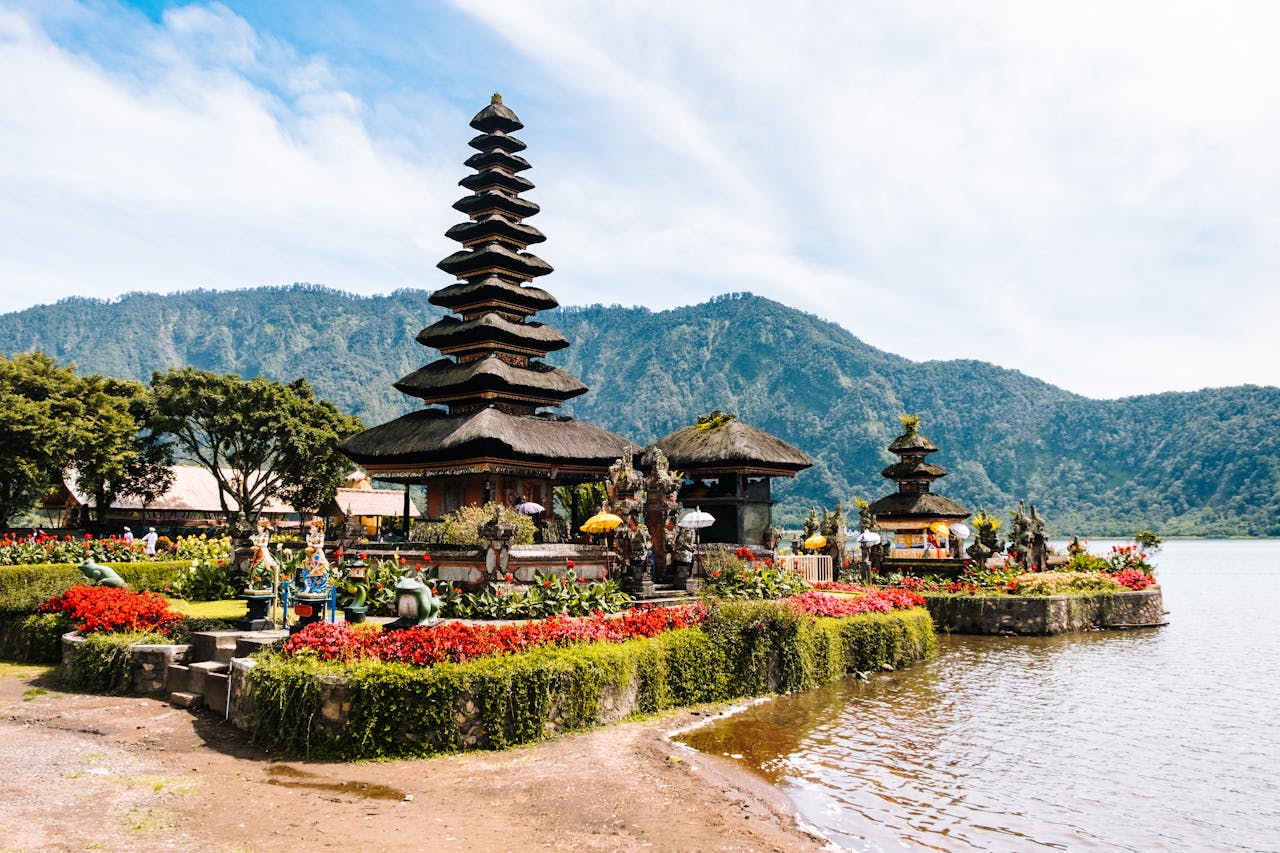
Why Bali, right now
Bali is a small island — about 90 miles long and 60 miles wide — but it packs in more variety than most countries. The south has beaches and nightlife: Seminyak for boutique hotels and sunsets, Kuta for surf and budget stays, Canggu for the digital nomad scene and good waves. Go 45 minutes north and you're in Ubud, surrounded by rice terraces and jungle, with temples on every corner and a morning market that sells fresh mangosteen for 25 cents. Another 90 minutes north and you hit Munduk or Lovina — cooler, quieter, volcano views, almost no tourists.
The value proposition is still exceptional. A private villa with a pool in Seminyak runs $80–$150 a night. A full Balinese rijsttafel dinner (a spread of 8–10 dishes) at a proper restaurant costs $15–$25. A 60-minute Balinese massage from a trained therapist — not a tourist-strip shop — runs $10–$15. You can live well here for $60–$80 a day including accommodation, and that includes eating good food and doing activities.
The thing most Americans don't expect: Bali has one of the richest living spiritual traditions of any place you can visit. The Balinese Hindu ceremonies happen constantly — daily offerings at family shrines, monthly temple festivals, elaborate cremation processions that fill entire streets. These aren't put on for tourists. If you time a visit around Galungan or Nyepi (the Balinese Day of Silence, when the entire island shuts down for 24 hours), you'll see something genuinely unlike anything else.
Top 5 things to do in Bali
-
Sunrise at Pura Lempuyang (Gates of Heaven)The split gate framing Mount Agung at sunrise is one of the most photographed images in Southeast Asia — and it's worth it in person. Get there by 5:30am to beat the tour buses. The temple is about 2 hours from Ubud and 2.5 hours from Seminyak. Hire a driver the night before ($30–$40 round trip). Dress modestly (sarong required at the temple gate — provided free), and don't let vendors push you toward the mirror pool photo setup if you don't want it.
-
Tegallalang rice terraces at golden hourThe rice terraces north of Ubud use a traditional subak irrigation system that's a UNESCO World Heritage Site. Go between 4pm–6pm when the light turns gold and the heat drops. Entry is a small suggested donation ($1–$2). Ignore the staged photo swings and hammocks — just walk the actual paths between the paddies. Takes about 90 minutes to walk the full circuit.
-
Sunrise hike up Mount BaturAn active volcano, 5,633 feet, with a 2-hour hike from the base and a caldera lake below the summit. Most hikers start at 2–3am to reach the top for sunrise. Guides are mandatory by local rule — budget $35–$60 including guide, transport, and breakfast at the summit. The lava fields at the top are still warm; you can cook eggs in the volcanic vents. Book through your hotel or a Ubud-based tour agency.
-
Surf lesson at Kuta or CangguBali's south coast has waves suited to beginners at Kuta and Seminyak, and more advanced breaks at Canggu, Uluwatu, and Padang Padang. A 2-hour beginner lesson with board rental and instructor runs $15–$25. Board rentals alone go for $5–$8/hour. Kuta is crowded but the wave is consistent and forgiving. Canggu attracts experienced surfers and has a better beach scene; the break requires more paddling ability.
-
Ubud cooking class and market tourUbud's morning market (Pasar Ubud) opens at 4am and winds down by 8am — go early for the real produce market before the tourist stalls take over. Many cooking schools start with a market tour, then teach 5–7 dishes: satay, tempeh, black rice pudding. Full-day classes run $35–$60. The skills translate; the recipes you bring home are genuinely usable. Book directly with schools in Ubud rather than through hotel concierges to skip the markup.
Bali's activity scene is massive — from white-water rafting on the Ayung River to silver jewelry workshops in Celuk. TripAdvisor has current reviews and live availability for the operators worth booking.
Explore Bali activities on TripAdvisor →Practical info for US travelers
| ✈️ Airport | DPS — Ngurah Rai International Airport, 5 miles south of Kuta. Grab to Seminyak: ~$5. Grab to Ubud: ~$18–$22. Avoid official airport taxis — they charge fixed tourist prices 2–3x higher than Grab. |
| 🛂 Visa | US citizens get a Visa on Arrival for 30 days ($35 fee). Extendable once for another 30 days at the immigration office in Denpasar. The e-VOA (online pre-purchase) is faster and skips the arrival queue — worth doing for $35 at molina.imigrasi.go.id. |
| 💵 Currency | Indonesian Rupiah (IDR). $1 ≈ IDR 16,300. ATMs widely available; expect IDR 25,000–50,000 fee per withdrawal. Avoid airport exchange desks — rates are significantly worse than in-town ATMs or authorized money changers on the main streets. |
| 🗣️ Language | Bahasa Indonesia and Balinese. English widely spoken in tourist areas, hotels, and restaurants. Outside tourist zones, basic Indonesian phrases help. |
| 🕐 Time zone | WITA (UTC+8), 12 hours ahead of EST. Plan 2 easy days to adjust — the jet lag hits harder east of Thailand. |
| 🌡️ Climate | Tropical. Dry season April–October: 82–90°F, low humidity, ideal. Wet season November–March: short daily rain squalls, still warm, higher humidity. Ubud is cooler than the coast by 5–8°F year-round. |
| 🔌 Plugs | Type C and F (220V). US travelers need a plug adapter. Most modern electronics (laptops, phone chargers) handle 220V — check the label on your device before plugging in. |
| 🛡️ Safety | Low violent crime. Watch for motorbike bag snatching in Kuta. Bali belly (stomach issues) is real — drink bottled water, be cautious with raw vegetables at street stalls. Petrol sold in glass Absolut bottles on roadsides is for scooters, not people. |
Best time to visit
April through October is the dry season, with July and August as peak months — Australian and European school holidays drive accommodation prices up 40–60% and the best beaches get crowded. The shoulder months of April–May and September–October offer dry-season weather with noticeably lower prices and fewer people at the main sites.
November through March is wet season. The rain comes as afternoon squalls rather than all-day downpours, and mornings are typically clear. The rice fields are at their most photogenic during the rainy season when they're a vivid green. Ubud and the inland areas are more resilient to rain than the beach towns. If your trip centers on culture, cooking, and temples rather than beach time, wet season is a reasonable trade for lower prices.
Where to stay
We've pinned top-rated hotels across Bali — from jungle villas in Ubud to beachfront properties in Seminyak — on an interactive map. Pick your dates and number of guests to see live availability and prices.
Browse Bali hotels on the map →📅 Dates are pre-filled from today's best flight deal when available — double-check them before booking.
Getting around
Grab works well in the south (Kuta, Seminyak, Canggu, Denpasar) and is the easiest way to get around. Fares are fixed in advance: airport to Seminyak runs about $5, Seminyak to Canggu about $4. In Ubud, Grab is available but local drivers have lobbied against it in town — you'll often need to walk 5 minutes from the central market to get a pickup. Gojek is the alternative app with better coverage in some areas.
Renting a scooter is how most people explore Bali independently — $5–$8/day from local rental shops. Traffic in South Bali is dense and chaotic during rush hours; the roads to Ubud and the north are more manageable. Helmets are required and checkpoints exist. Wear one and carry your international license — police fines run $10–$20 but the hassle isn't worth it.
Hiring a private driver for a full day ($40–$60) is the most efficient way to cover multiple sites — Ubud temples, rice terraces, and a waterfall in one loop. Your hotel can arrange this; Grab also has a "hire" function for multi-stop trips.
Food & local tips
Balinese food is distinct from the Indonesian dishes most Americans know. Babi guling (spit-roasted pig with turmeric and lemongrass) is the ceremonial dish that shows up at festivals and in dedicated warung restaurants — Ibu Oka in Ubud is the famous one, serving from 11am until sold out (usually by 1pm). Lawar — a minced meat and shredded coconut salad spiced with chili and galangal — shows up at the same places. Budget $3–$6 for a full babi guling plate with rice and soup.
Every temple in Bali requires a sarong around your waist. Most provide them at the entrance (free or $1 deposit). The rule is a waist covering, not a head covering — don't let sarong touts at tourist temples convince you to buy a sash you don't need. Women on their period are asked not to enter certain inner temple areas; signs in English usually explain the specific rules at each site.
Coffee in Bali deserves more attention than it usually gets. Indonesian coffee culture is serious — Arabica beans grown in the Kintamani highlands show up at excellent cafes in Canggu and Ubud for $2–$4 a cup. Cold brew and single-origin pour-overs are common; the quality is genuinely high. Skip the famous "kopi luwak" (civet cat coffee) — the production involves animal welfare issues and the coffee itself isn't notably better than regular Kintamani beans.
Ready to fly to Bali?
Search live fares on Kiwi.com with flexible dates to find the best price from your city. Our AI monitors this route — set a price alert on the homepage to catch the next fare drop to Denpasar.
✈️ Search flights to Bali